By
By An inflamed appendix is a medical emergency and needs prompt action.
It is important to know what appendicitis feels like, because it can be the difference between a routine procedure and a life-threatening complication.
This is frequently portrayed in television dramas as a dramatic and sudden collapse.
But the early hours of the pain are often more subtle and confusing.
This guide will help you to:
- decipher your symptoms
- understand the progression of pain from appendicitis
- know when it’s time to head to the emergency room.
First, What Is Appendicitis?
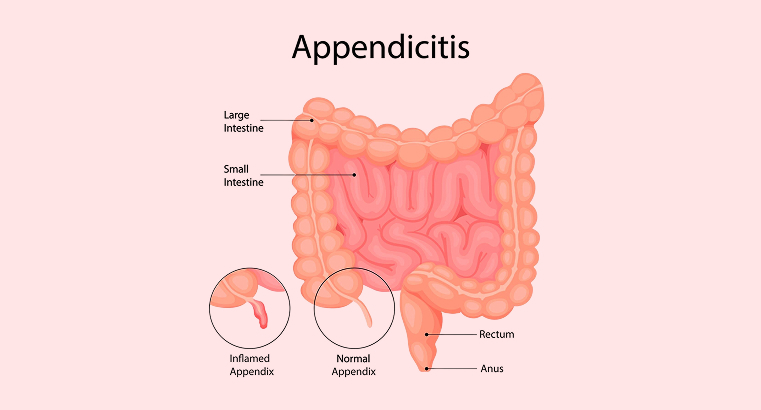
Appendicitis is the inflammation of the appendix. This is a small pouch that extends out from the large intestine located on the lower right side of the abdomen.
For centuries, scientists have considered the appendix a vestigial organ with no function.
But contemporary medical research suggests it may have a supporting function in immune health as a “safe house”. This is for beneficial gut bacteria.
Typically, a blockage in the small internal opening of the appendix (the lumen) starts the condition.
Moreover, a variety of factors can cause this blockage.
- A lump of stool or a faecalith that is enlarged.
- Swollen lymphoid tissue that results from an infection
- Foreign objects or intestinal parasites.
- In rare cases, benign or malignant tumors
When a blockage develops, the appendix becomes a potentially life-threatening closed chamber.
Inside, naturally occurring bacteria start to multiply rapidly. The bacteria begin to multiply and the organ becomes filled with pus, causing it to swell and put pressure on the inside.
If this pressure remains unchecked, it can cause a decrease in blood flow in the area. This causes the tissue to die and ultimately cause the appendix to rupture.
Location Of Appendicitis
In most human anatomy, the appendix sits tightly packed in the lower right quadrant of the abdomen.
The appendix is usually a couple of inches in from the right hip bone if you put your hand flat on the hip bone.
It may be located slightly differently in each individual, however.
In some people, the appendix is “retrocecal” (behind the colon).
Then, in these situations, the inflammation may result in deep back pain or discomfort in the pelvis instead of the typical abdominal pain.
In addition, the appendix is physically pushed up during pregnancy, so that the pain is felt in the upper right quadrant of the abdomen.
Is There Any Difference In Pain Between Genders?
The basic mechanism of appendicitis is the same for all people.
But clinical research reveals that there are marked differences in the clinical presentation, diagnosis and experience of the condition between males and females.
In a systematic review published in the Postgraduate Medical Journal, men were found to be more likely to have the classic textbook symptoms of migratory lower right quadrant pain and anorexia (immediate loss of appetite).
Females, on the other hand, may have overlapping clinical features which can make diagnosis difficult.
Biological females may experience pain from appendicitis as a deep pain in the pelvis, intense menstrual cramps, or even painful urination.
This is because the inflamed appendix is located in the same area as the right ovary and fallopian tube, and the nerves to both organs are close together in the pelvic cavity.
These anatomical overlaps mean that women are approximately 33% more likely to be initially misdiagnosed with gynecological conditions such as pelvic inflammatory disease (PID), ruptured ovarian cysts or ectopic pregnancies.
This means that women are often subjected to more detailed pre-operative imaging, and medical guidelines often call for it.
This involves specific pelvic ultrasounds and CT scans to exclude reproductive health emergencies before going into the operating room.
What Does Appendicitis Feel Like?

To understand the exact nature of the pain associated with appendicitis, it is necessary to examine the unique time course of appendicitis. The pain of appendicitis is progressive, dynamic and relentless unlike a normal stomach bug.
Early Signs: What Does Early Appendicitis Feel Like?
The pain is typically vague, dull, diffuse and achy in the early phase, typically the first 2-12 hours.
| Early Sign | Description |
| The Navel Center | Pain almost always starts directly around or just above the belly button. |
| The Indigestion Trap | Pain is easily mistaken for gas, indigestion, or mild food poisoning. A feeling of fullness or bloating is common. |
| Systemic Malaise | Accompanied by a total loss of appetite and a persistent wave of mild nausea. |
How The Pain Changes
After a few hours, a dramatic change takes place.
When the swelling within the appendix reaches the stage where it actually comes into contact with and irritates the parietal peritoneum, the pain shifts dramatically.
This is the soft, nerve-rich tissue that lines the inside of your belly.
The dull, diffuse pain radiates down and out, right in the lower right quadrant of the abdomen.
The pain changes from a dull ache to a sharp, constant, and intense pain.
This localized pain is very sensitive to any type of physical jarring. The stabbing pain in the lower right side can be triggered by walking, coughing, sneezing, taking a deep breath, or even by a bumpy ride in a car.
Does The Pain Come And Go?
One of the most prevalent and dangerous misunderstandings is that the pain of appendicitis is very variable.
Sometimes, the pain is a bit intermittent in the very early hours, when the appendix is trying to get past the initial blockage.
When acute appendicitis is well developed, however, the pain is continuous and does not subside, and gradually increases with each passing hour.
| Critical Warning |
| Don’t celebrate if you’ve had a lot of pain in the lower right abdomen that suddenly went away. If the pain suddenly gets worse, it means that the appendix has ruptured. This will relieve the pressure and give you some temporary relief, but it will introduce the toxic bacteria into your sterile abdominal cavity, and cause a much more serious infection. |
Symptoms Of Appendicitis
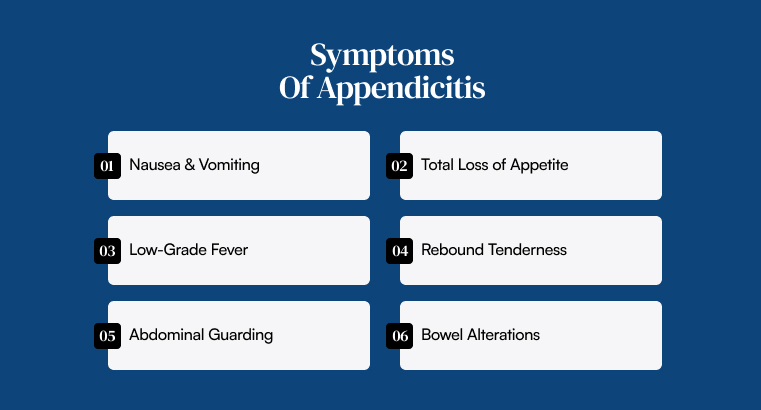
The most common symptom is abdominal pain, but appendicitis doesn’t always present with just that symptom.
Generally, it is accompanied by a group of secondary symptoms. Be sure to pay attention to this set of symptoms.
Symptoms Of Appendicitis: At A Glance
| Symptom | Primary Characteristic | Key Clinical Tell |
| Nausea & Vomiting | Persistent, mild wave of sickness. | Almost always develops after the abdominal pain has already started. |
| Total Loss of Appetite | Sudden, complete lack of interest in any food. | Finding even your absolute favorite meal unappealing or repulsive. |
| Low-Grade Fever | Mild temperature increase between 99.5°F and 100.5°F. | Spikes significantly higher if the appendix tears or ruptures. |
| Rebound Tenderness | Sharp, stabbing pain upon the release of physical pressure. | Pain feels worse when hand pressure is quickly removed from the lower right side. |
| Abdominal Guarding | Involuntary tensing or rigid tightening of the stomach muscles. | The abdomen feels hard, firm, or board-like to the touch. |
| Bowel Alterations | Disrupted digestion leading to constipation or mild diarrhea. | Accompanied by a painful inability to pass gas or ease bloating. |
Nausea And Vomiting
The feeling of nausea and vomiting almost always develops after the abdominal pain has already started.
If vomiting happens prior to the onset of pain, it is more likely to be a typical gastroenteritis.
Total Loss Of Appetite
A complete loss of appetite, or anorexia, is one of the most dependable and consistent symptoms of appendicitis.
For example, you serve someone who may have appendicitis their favorite meal.
They do not want to eat it, or they find it very distasteful or repulsive.
Therefore, it is a good clinical marker for acute appendicitis.
Low-Grade Fever
As your body’s immune system attempts to fight off the localized bacterial infection brewing inside the organ, your body temperature will typically rise.
In the early, uncomplicated stages, this is usually a low-grade fever sitting between 99.5°F (37.5°C) and 100.5°F (38°C).
However, if the appendix begins to gangrene or completely ruptures, releasing bacteria into the abdominal cavity, this fever will often spike significantly higher, accompanied by chills and shaking.
Rebound Tenderness
This is a classic diagnostic sign that healthcare providers look for during a physical examination, known formally as Blumberg’s sign.
If you press firmly and deeply down on the lower right side of the abdomen and then release your hand suddenly, the pain feels significantly sharper.
This pain is stabbing and more intense when you release pressure than during the initial downward compression.
This happens because the sudden release snaps the irritated peritoneal lining back into place, jarring the inflamed appendix.
Abdominal Guarding
As the localized inflammation worsens, the muscles in your stomach wall will involuntarily tense up, spasm, or become completely rigid to the touch.
This is your body’s natural defense mechanism (guarding) attempting to create a rigid shield to protect the infected, sensitive organs underneath from external pressure.
In advanced stages, the abdomen can become so stiff that it feels hard like a board, which is a sign of a surgical emergency.
Bowel Alterations
The intense localized inflammation can easily disrupt the normal wave-like muscle contractions (peristalsis) of your large intestine.
This often causes noticeable bowel alterations, such as sudden constipation or small amounts of mucus-lined diarrhea.
Many individuals also report a distressing sensation of severe bloating and an agonizing inability to pass gas.
Moreover, this leads them to mistakenly believe they are just severely constipated.
What Can Be Mistaken For Appendix Pain
Here is one thing you should know.
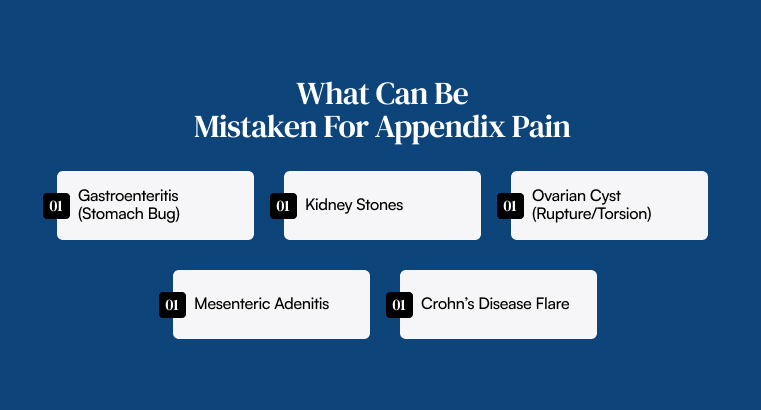
The human abdomen houses many vital organs. Several different conditions can mimic the symptoms of acute appendicitis, which doctors call “differential diagnoses”.
The table below highlights how to distinguish appendicitis from its common lookalikes.
| Condition | Overlapping Symptoms | Key Distinguishing Features |
| Gastroenteritis (Stomach Bug) | Nausea, vomiting, abdominal cramping, and diarrhea. | Pain is usually diffuse and spread across the entire stomach rather than localized to the lower right. Vomiting often starts before the pain. |
| Kidney Stones | Severe, sharp abdominal or flank pain accompanied by nausea. | Pain originates in the back or side (flank) and radiates down toward the groin. It often causes visible blood in the urine. |
| Ovarian Cyst (Rupture/Torsion) | Sudden, sharp lower abdominal pain on the right side. | Pain is often tied to the menstrual cycle. It lacks the classic migration from the belly button to the hip. |
| Mesenteric Adenitis | Lower right quadrant pain, fever, and nausea. | This is an inflammation of the abdominal lymph nodes, most common in children, and frequently follows a recent upper respiratory viral infection. |
| Crohn’s Disease Flare | Chronic lower right abdominal pain, diarrhea, and low fever. | Typically presents with a history of recurrent digestive issues, unexplained weight loss, and bloody stools. |
What Should You Do If You Experience The Pain
If you suspect that you or a loved one is experiencing appendicitis, go to the nearest emergency room immediately.
Every hour matters. An untreated and inflamed appendix can progress from initial irritation to a dangerous rupture within 48 hours to 72 hours.
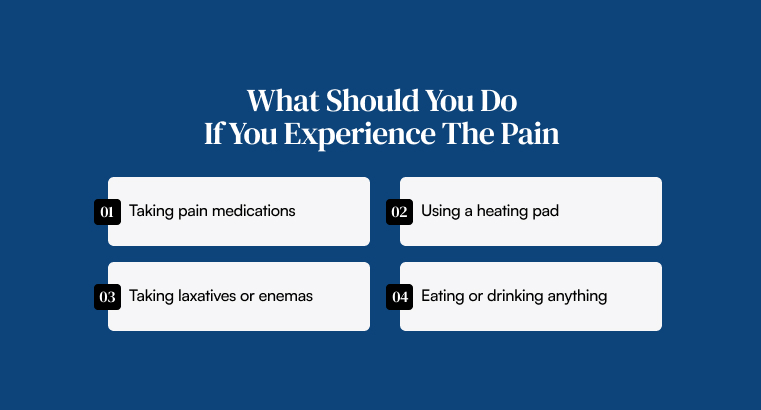
While you are en route to seek emergency medical care, it is very important for you to follow certain strict rules to prevent an accidental rupture.
| Things To Avoid Doing | Description |
| Taking pain medications | Massaging or masking the pain with heavy over-the-counter painkillers can hide your evolving symptoms from the ER physicians, delaying an accurate diagnosis. |
| Taking laxatives or enemas | If your discomfort is caused by appendicitis rather than constipation, these treatments drastically increase the pressure within your bowel, which can cause the appendix to burst immediately. |
| Using a heating pad | Applying heat directly to an actively inflamed, infected organ increases localized blood flow, accelerating the swelling and bringing it closer to a rupture. |
| Eating or drinking anything | Keep your stomach entirely empty. If the surgical team needs to take you into the operating room immediately, having food or liquids in your stomach increases anesthesia risks. |
Treatment Strategies In Appendicitis

Once you arrive at the hospital, the medical team will quickly evaluate you using physical exams, blood panels, and imaging tests like a CT scan or ultrasound.
For instance, here, in blood panels, they look for elevated white blood cells.
If the diagnosis is confirmed, the primary treatment strategy remains a surgical appendectomy, which is the physical removal of the appendix.
Laparoscopic Surgery
In the vast majority of uncomplicated cases, surgeons utilize a minimally invasive approach called laparoscopic appendectomy.
The surgeon makes three tiny incisions in the abdomen, inserts a miniature camera along with specialized tools, and safely removes the appendix.
This approach results in minimal scarring, less postoperative discomfort, and a rapid return to daily activities.
Additionally, recovery is often within a few days to a week.
Open Surgery
If your appendix has already ruptured, or a severe infection has occurred causing an abscess to form, the surgeon is likely to perform a traditional open appendectomy.
This will require a single, larger incision in the lower right abdomen, further allowing the surgical team to thoroughly wash out the abdominal cavity.
This ensures that all tracking bacteria are cleared.
Recovery from open surgery is longer, which usually requires several days in the hospital and a few weeks of restricted activity.
Antibiotics
You will receive standard intravenous antibiotics before and during surgery to combat infection.
In highly specific, uncomplicated cases where the appendix has not ruptured, doctors may occasionally use a course of high-dose antibiotics as a standalone treatment strategy.
However, surgery remains the most reliable cure.
Act Early To Stay Safe
When it comes to your health, never ignore what your body is trying to tell you.
At first, a dull ache around the belly button may seem like a minor inconvenience.
However, its migration into a sharp, constant pain in the lower right abdomen is a critical warning sign that should never be ignored.
Appendicitis progresses rapidly, and waiting to see if the symptoms improve on their own can lead to severe complications.
First, try learning to recognize the evolving timeline of the pain. Following this, go on to understand how it presents differently across genders.
Finally, avoid common pitfalls like heating pads or pain medications. As a result, you protect yourself from an accidental rupture.
If you suspect your symptoms point toward an inflamed appendix, err on the side of caution and head directly to the nearest emergency room.
Quick medical evaluation remains your best tool for a safe, smooth, and speedy recovery.
Disclaimer: The information provided in this article is for general informational purposes only. It does not, and is not intended to, constitute medical or health advice. Please consult a qualified healthcare professional for medical guidance or expert health assistance.
References
- Kollias, T. F., Gallagher, C. P., Albaashiki, A., Burle, V. S., & Slouha, E. (2024). Sex Differences in Appendicitis: A Systematic Review. Cureus, 16(5), e60055. National Library of Medicine.
- University of Pittsburgh Medical Center. (2025). Appendectomy Benefits, Risks, and What to Expect. University of Pittsburgh Medical Center.
What is your reaction?