By
By When someone comes across the term “blood thinner”, the first thought that comes to mind may be a little misleading.
At least, for someone with no medical knowledge, you may first think that a blood thinner might make your blood thin like water.
Well, here’s the thing. A blood thinner is actually a medication prescribed by doctors that just slows down the body’s clotting process.
In simple terms, these are prescription drugs that have the function of keeping your blood from forming dangerous clots. They also stop existing clots from getting bigger.
Blood thinners save millions of lives by preventing dangerous clots that eventually lead to strokes, heart attacks, and deep vein thrombosis.
Be it you or a loved one, if an anticoagulant or antiplatelet medication has been prescribed to you, a basic understanding on how they work is needed. This can be quite overwhelming.
Thus, in this guide, we break down the top 10 blood thinners along with explaining their unique differences, common uses, and safety essentials.
So, what are the top 10 blood thinners? Let’s find out!
What Are Blood Thinners?

First, before we delve into the top 10 blood thinners, let’s understand the basics.
A blood thinner is a medication that helps in the prevention of dangerous blood clots from forming or growing larger in your blood vessels and heart.
Moreover, this reduces the risk of conditions such as strokes and heart attacks.
Despite its name, these drugs do not actually make your blood thin or watery. Instead, they interfere with your body’s natural clotting process.
Main Types Of Blood Thinners
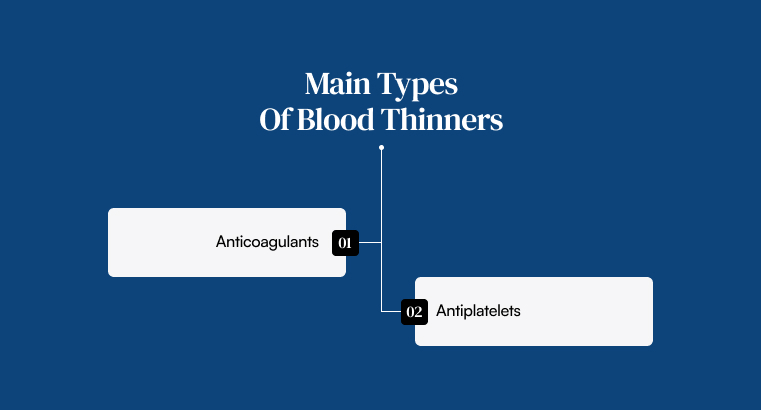
Blood thinners are typically categorized into two main types, which are anticoagulants and antiplatelets.
They slow down the clotting process or stop blood cells from sticking together. However, they do not dissolve existing clots.
| Types Of Blood Thinners | Functions | When Are They Prescribed | Types |
| Anticoagulants | Slows down the body’s blood clotting process by targeting specific proteins | • Atrial fibrillation • Deep vein thrombosis • Pulmonary embolism • Artificial heart valves | • Direct Oral Anticoagulants (DOACs) • Vitamin K antagonists • Injectable anticoagulants |
| Antiplatelets | Keeps the blood cells (platelets) from clumping together to form a plug in arteries | • Heart attacks • Strokes • Transient ischemic attack (TIA) • Placement of a heart stent | • Aspirin • P2Y12 inhibitors • Other antiplatelets like dipyridamole |
Anticoagulants
Anticoagulants perform the primary function of slowing down the body’s blood clotting process by targeting specific proteins in the clotting cascade.
They are commonly prescribed for conditions including the following:
- Atrial fibrillation, which is an irregular heart rhythm
- Deep vein thrombosis (DVT)
- Pulmonary embolism
- Artificial heart valves
Antiplatelets
Antiplatelets keep your blood cells called platelets from clumping together to form a plug in arteries.
They are more often prescribed after a heart attack, stroke, transient ischemic attack (TIA), or placement of a heart stent.
What Conditions Do They Treat?
When it comes to conditions related to abnormal or dangerous blood clot formations in the heart, veins, and arteries, blood thinners play the critical function of treating and preventing them.
For instance, major conditions include atrial fibrillation (AFib). In AFib, there is an irregular, often rapid heart rhythm.
This causes blood to pool in the upper chambers of the heart. Moreover, pooling blood easily forms clots, which can break loose, travel to the brain, and cause a stroke.
Other conditions apart from AFib include:
- Deep Vein Thrombosis (DVT)
- Pulmonary Embolism (PE)
- Mechanical or artificial heart valves
- Coronary artery disease (CAD) and angina
- Prior heart attack (Myocardial Infarction)
- Stroke and transient ischemic attack (TIA)
- Peripheral artery disease (PAD)
- Post-Surgical Clot Risk (e.g., Hip or Knee Replacement)
- Inherited or Acquired Blood Clotting Disorders
What Are The Top 10 Blood Thinners?
The top commonly referenced blood thinners are generally split into two types:
- Anticoagulants that slow down the clot-making proteins in your body
- Antiplatelets that keep blood cells from sticking together
The choice of the right medication is heavily dependent on your specific medical diagnosis, kidney function, bleeding risk, and whether routine lab monitoring is needed.
At A Glance
| Categorization | Types | Description |
| Direct Oral Anticoagulants (DOACs) | Apixaban (Eliquis) | Commonly prescribed for stroke prevention in atrial fibrillation and to treat deep vein thrombosis (DVT) or pulmonary embolism (PE) |
| Rivaroxaban (Xarelto) | A once-daily oral option used for clot prevention and treatment | |
| Dabigatran (Pradaxa) | A direct thrombin inhibitor taken orally | |
| Edoxaban (Savaysa / Lixiana) | A once-daily oral factor Xa inhibitor | |
| Vitamin K Antagonists & Injectable Anticoagulants | Warfarin (Coumadin / Jantoven) | A traditional oral anticoagulant that requires regular blood monitoring (INR checks) and diet management; essential for mechanical heart valves |
| Heparin (Unfractionated Heparin) | An injectable hospital-based anticoagulant used for rapid or acute clot control | |
| Enoxaparin (Lovenox) | A low-molecular-weight heparin given via subcutaneous injection | |
Antiplatelet Medications | Aspirin | An over-the-counter or prescription NSAID that makes platelets less sticky, often used for secondary prevention of heart attacks and strokes |
| Clopidogrel (Plavix) | An oral P2Y12 inhibitor frequently prescribed after stents, heart attacks, or strokes | |
| Ticagrelor (Brilinta) | An oral antiplatelet medication used alongside low-dose aspirin for acute coronary syndromes or high-risk cardiac events |
Direct Oral Anticoagulants (DOACs)
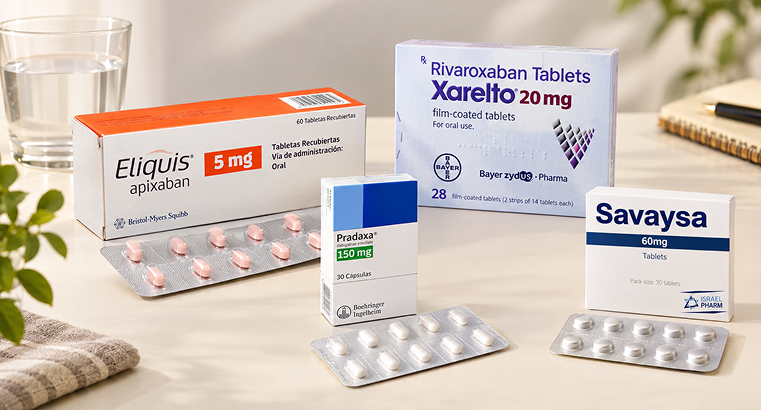
A DOAC, or direct oral anticoagulant, is considered a type of prescription medication that is used to prevent and treat dangerous blood clots.
Unlike older anticoagulants such as warfarin, which blocks multiple vitamin K-dependent clotting factors, DOACs directly target and block a specific single protein in the blood clotting cascade.
For conditions such as DVT, AFib, PE, and other conditions, these are prescribed.
Apixaban (Eliquis)
This is a prescription blood thinner that prevents and treats harmful blood clots.
One of the primary uses of Apixaban is to lower the risk of stroke and dangerous blood clots in people with nonvalvular atrial fibrillation.
Besides this, the medicine also prevents blood clots from forming after hip and knee replacement surgery.
Apixaban is actually a direct factor Xa inhibitor, which blocks a specific protein in the clotting cascade. Moreover, it stops the blood from forming unwanted clots too easily.
For any standard adult with AFib, the standard dosage is usually 5 mg twice daily.
A lower dose of 2.5 mg twice daily may be prescribed if you are 80 years or older, weigh 60kg or less (132 pounds or lower), or have high serum creatinine or kidney issues.
For patients with DVT or PE, the starter does is often 10 mg twice daily for the first 7 days. This is followed by 5 mg twice daily.
Generally, this medicine is taken twice a day orally, with or without food. Moreover, swallow these tablets with water without chewing or crushing them.
Remember one crucial rule. Do not stop taking Eliquis suddenly without having a consultation with your doctor.
The reason behind this is that it increases your risk of severe stroke or blood clots.
Rivaroxaban (Xarelto)
The next DOAC in the list is Xarelto, whose generic name is rivaroxaban. This prescription blood thinner belongs to the class of medications known as direct factor Xa inhibitors.
First of all, this drug blocks factor Xa, which is a key protein your blood needs to make clots.
This slows down clotting and prevents harmful blockages from forming in blood vessels.
Unlike older blood thinners like warfarin, this drug generally does not require frequent routine blood clotting tests such as INR monitoring.
However, the most common major side effect associated with rivaroxaban is an increased risk of bleeding.
This includes:
- Nosebleeds
- Heavy periods
- Bleeding gums
Before you take this medicine, remember one thing. Never stop the medicine abruptly due to a sudden sharp increase in the risk of having a stroke or a dangerous blood clot.
Lastly, this can interact dangerously with other blood thinners, NSAIDs such as ibuprofen or naproxen.
Dabigatran (Pradaxa)
Sold under the brand name Pradaxa, Dabigatran is a DOAC that also fulfils the purpose of preventing blood clots.
The medicine is a direct thrombin inhibitor, which blocks thrombin. This key enzyme coagulates blood and stops harmful blood clots from forming.
Take the capsules with food once or twice daily. This is fully dependent on specific kidney function or post-surgery instructions.
In case of a missed dose, take it as soon as you remember, unless your next does is due within 6 hours. Also, never take two doses at the same time.
Edoxaban (Savaysa / Lixiana)
Edoxaban, sold as Savaysa or Lixiana, is another DOAC that belongs to the class of direct factor Xa inhibitors.
This medication first selectively blocks factor Xa. Then, it goes on to stop prothrombin from converting into thrombin, which lowers the blood’s ability to form harmful clots.
Typically, doctors prescribe 60 mg taken by mouth once daily, with or without the consumption of food.
Healthcare providers can also adjust the dose by reducing the daily amount for patients with kidney impairment, low body weight, or those taking specific P-glycoprotein (P-gp) inhibitor medications.
Vitamin K Antagonists & Injectable Anticoagulants
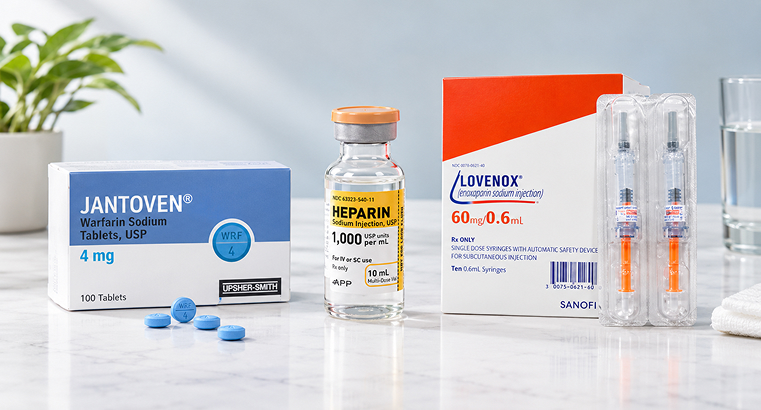
Clinicians use vitamin K antagonists (VKAs) and injectable anticoagulants, which belong to the next class of blood-thinning medications, to prevent and treat thromboembolic events.
These include DVT, PE, and stroke in atrial fibrillation.
A VKA with a longer half-life, favored in certain European regions due to a more stable pharmacokinetic profile.
Warfarin (Coumadin / Jantoven)
Warfarin, sold under brand names such as Coumadin and Jantoven, is a VKA that blocks the liver’s production of vitamin K-dependent clotting factors.
This causes blood to take longer to form a clot.
First of all, you need regular blood tests (Prothrombin Time / International Normalized Ratio or PT/INR) to make sure your dose is safe and effective.
Usually, the target INR range sits between 2.0 and 3.0 for most conditions, or higher if you have a mechanical heart valve.
Moreover, it does not break up existing blood clots. Instead, it stops them from getting larger or prevents new ones from forming.
You must take it at the same time every day and keep your dietary vitamin K intake (found in leafy green vegetables) steady.
Heparin (Unfractionated Heparin)
An unfractionated heparin (UFH) is a fast-acting injectable blood thinner that binds to antithrombin to block clotting factors like thrombin (IIa) and factor Xa.
It speeds up antithrombin activity to stop new blood clots from forming and existing clots from growing. Moreover, it does not dissolve existing clots.
Working within minutes when given intravenously (IV), the medication wears off quickly once stopped.
Frequent monitoring using the aPTT (activated partial thromboplastin time) or anti-Xa levels is required to ensure the dose is safe and effective.
Enoxaparin Or Lovenox
Enoxaparin, generally sold under the brand Lovenox, contains the active drug enoxaparin sodium, which is a low-molecular-weight heparin (LMWH).
Acting as an anticoagulant, it inhibits clotting factors like Factor Xa to prevent or treat blood clots.
Moreover, healthcare providers use the drug to prevent and treat DVT, PE, and complications from acute coronary syndrome or angina.
Healthcare providers administer this drug as a subcutaneous injection, usually under the skin of the abdomen about 2 inches away from the belly button, once or twice daily.
In addition, do not expel the small air bubbles in pre-filled syringes. They are intentionally placed to ensure you receive the full prescribed dose.
One thing you should definitely consider. Use the medication with caution alongside other medications that will increase bleeding.
Antiplatelet Medications
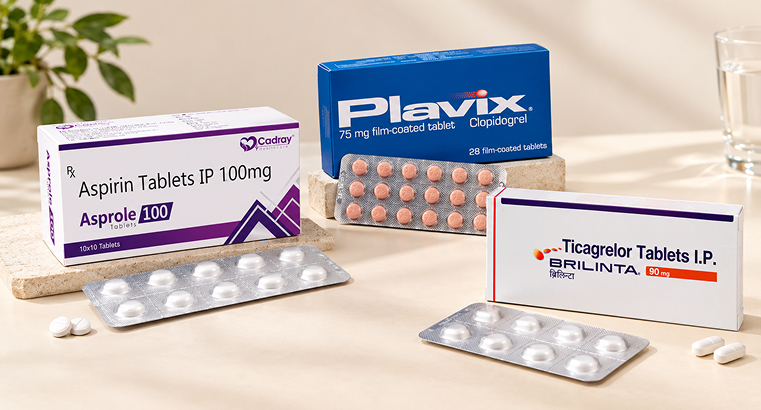
Antiplatelet drugs are medications that stop blood platelets from sticking together to prevent harmful blood clots in arteries.
Aspirin
Aspirin is the most common and foundational antiplatelet drug.
Moreover, it blocks specific substances in platelets to lower the risk of heart attacks and strokes, and patients typically take it once daily.
Clopidogrel Or Plavix
Patients take clopidogrel, an ADP receptor inhibitor, once a day.
Doctors often prescribe the medicine for people with heart disease, peripheral artery disease, or after a stent placement, or use it when a patient cannot tolerate aspirin.
Ticagrelor (Brilinta)
Commonly known by brand names such as Brilinta, Ticagrelor is an oral antiplatelet medication.
Healthcare professionals prescribe this medication alongside low-dose aspirin to prevent dangerous blood clots in patients with acute coronary syndrome, coronary artery disease, or a history of stroke.
It effectively lowers the risk of heart attacks and strokes.
However, its main side effects during the first few weeks of treatment include:
- an increased risk of bruising and prolonged bleeding
- temporary shortness of breath
- dizziness.
Therefore, to stay safe, you must never stop taking ticagrelor abruptly. Doing so will sharply increase your risk of a sudden heart attack or stent blockage.
Additionally, you should limit alcohol, avoid high-dose aspirin (above 100 mg), and always inform your dentist or surgeon well in advance.
This is because you may need to pause the medication five days before any procedure to prevent excessive bleeding.
What Safety Risks And Precautions Do You Need To Consider?
When you take blood thinners, the overall ability of your body to form clots decreases. As a result, this protects you from strokes. On the other hand, it significantly increases your risk of serious bleeding.
Due to this, everyday safety requires you to actively prevent injuries and falls. For instance, you should switch to an electric razor. Or you may use a soft-bristled toothbrush and wear sturdy shoes indoors.
All of this will help you to avoid accidental cuts or slips.
Avoid contact sports and heavy power tools, and choose safer exercises like walking instead.
Moreover, keeping specialized clotting bandages or powders at home can help you quickly manage minor superficial bleeding.
Finally, always notify your dentist or surgeon about your medication well before any procedure.
Proceed to seek emergency medical care immediately if you experience a head bump, blood in your stool or urine, or a nosebleed that will not stop.
Disclaimer: The information provided in this article is for general informational purposes only. It does not, and is not intended to, constitute medical or health advice. Please consult a qualified healthcare professional for medical guidance or expert health assistance.
References
- National Blood Clot Alliance. (2018). Unfractionated heparin (UFH) – blood clots. Blood Clots. National Blood Clot Alliance.
- Mayo Clinic. (2026). Apixaban (oral route). Mayo Clinic.
- Nguyen, P. A. (2026, June 9). 12 commonly prescribed blood thinners. Verywell Health.
- eMedicineHealth. (2022). Blood thinner medications: Most common types, brand names, generic. eMedicineHealth.
- Kauvery Hospital. (2026, May 19). What are blood thinners? uses, side effects & safety tips. Kauvery Blog.
What is your reaction?