 By
By A strength training gym is built for people who want measurable progress, not just a place to sweat for an hour.
That difference matters more than most beginners realize.
When someone walks into a regular gym, they usually see rows of treadmills, cable machines, bikes, mirrors, and a few weight stations.
It feels open, familiar, and easy to use.
But after a few weeks, many people start wondering why their body is not changing much.
That is where a strength training gym can feel completely different.
What Makes a Strength-Focused Gym Different?
A gym focused on lifting is usually designed around progressive overload.
That means you are not just exercising.
You are training your body to handle more weight, better movement, and stronger patterns over time.
You will usually find squat racks, barbells, dumbbells, kettlebells, benches, sleds, resistance bands, trap bars, and open floor space.
Those tools may look simple, but they build real strength when used correctly.
A regular fitness center may have weights too, but the layout often pushes people toward machines and cardio equipment first.
That is not always bad.
It just depends on your goal.
If your main goal is to build muscle, improve bone density, protect your joints, and change your body shape, structured resistance training usually wins.
The Regular Gym Experience
Most people start at a regular gym because it feels less intimidating.
You can hop on a treadmill, try a few machines, and leave feeling like you did something healthy.
That is useful for general movement and heart health.
But the problem comes when there is no plan.
I have seen people do the same 20-minute cardio warmup, the same three machines, and the same light dumbbell routine for months.
They worked hard.
They showed up.
But their body had no reason to adapt because the workout never changed.
The body needs a clear challenge.
If the weight, reps, tempo, or range of motion never improves, results slow down.
That is why many regular gym members feel stuck even though they are consistent.
The Strength Training Experience
Training for strength feels different because every session has a purpose.
You may walk in knowing you are going to squat, press, hinge, pull, carry, or work on core stability.
You track what you lifted last week.
You try to move a little better or lift a little more this week.
That simple habit creates momentum.
For example, someone may start with goblet squats using a 20-pound dumbbell.
After a few weeks, they may move to 30 pounds.
Then they may learn a barbell squat.
That progress builds confidence fast.
It also makes workouts more interesting because there is a clear scoreboard.
You are not guessing whether you improved.
You can see it.
Which Gym Builds Muscle Better?
A lifting-focused facility usually gives you better tools for muscle growth.
Muscle growth depends on tension, good form, recovery, and enough training volume.
Machines can help with that, but free weights and compound lifts usually train more muscles at once.
A deadlift does not just train your back.
It also works your glutes, hamstrings, grip, core, and upper back.
A push-up does not only work your chest.
It also trains your shoulders, triceps, abs, and body control.
That is the value of compound movement.
You get more return from each rep.
A regular gym can still help you build muscle if you know what you are doing.
But many people do not have a plan, so they bounce between random exercises.
That makes progress harder to measure.
Which Gym Helps With Fat Loss?
Fat loss does not come from one type of gym alone.
It comes from nutrition, daily movement, sleep, stress control, and consistent training.
But strength work helps because muscle is active tissue.
The more lean muscle you build, the more your body supports a higher daily energy demand.
Cardio burns calories during the session.
Resistance training helps shape the body while supporting long-term metabolism.
That is why two people can lose the same amount of weight but look very different.
One person may only do cardio and end up smaller but softer.
Another person may lift weights and look leaner, firmer, and more athletic.
The scale does not tell the full story.
Body composition does.
Which Gym Is Better for Beginners?
Beginners can succeed in either setting.
The better choice depends on support, coaching, and comfort.
A regular gym may feel easier on day one because the machines often have instructions.
But machines do not always teach proper movement.
They also do not always fit every body well.
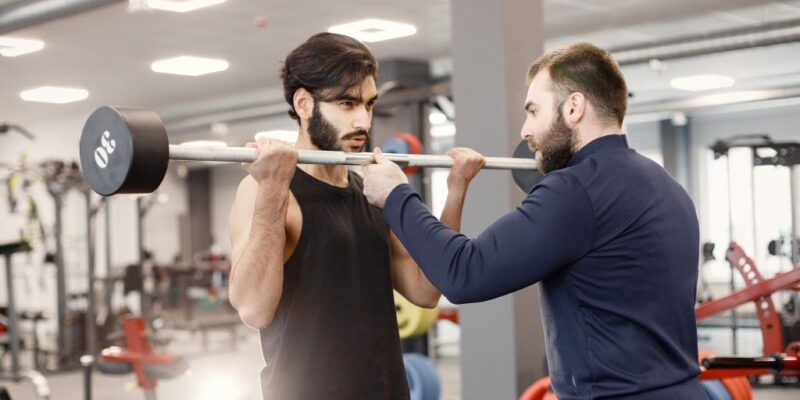
A coaching-based lifting environment can be better for beginners because people learn form from the start.
That matters.
Bad habits with squats, deadlifts, rows, or presses can lead to pain later.
Good coaching helps you understand posture, breathing, bracing, foot position, and safe progress.
A beginner does not need heavy weight right away.
They need clean movement first.
Real-Life Example: Why Random Workouts Fail
Think about someone named Mike.
Mike joins a gym in January.
He wants to lose weight, get stronger, and feel better in his clothes.
For the first month, he walks on the treadmill, uses the chest press, does curls, and finishes with crunches.
He feels motivated.
By March, he is bored.
His weight has barely changed.
His lifts are the same.
He starts skipping days.
Now imagine Mike starts following a basic strength plan instead.
Monday is squat and push.
Wednesday is hinge and pull.
Friday is full-body conditioning.
He tracks his weights and adds small improvements each week.
After three months, he feels stronger, sleeps better, and notices his jeans fitting differently.
The difference was not magic.
It was structure.
Regular Gym Pros and Cons
A regular gym gives you variety.
You can do cardio, machines, stretching, classes, and casual workouts.
It is useful for people who want flexibility.
It can also be more affordable and easier to find near home.
The downside is that too much choice can create confusion.
When every machine is available, it is easy to do whatever feels comfortable.
Comfort is not always where results happen.
Many people avoid the movements they need most because those movements feel difficult.
That is usually the point where progress is hiding.
Strength-Based Gym Pros and Cons
A lifting-focused space gives you structure, better equipment for resistance work, and often a stronger training culture.
People around you are usually tracking lifts, practicing form, and working toward clear goals.
That environment can be motivating.
It can also help you take training more seriously.
The downside is that it may feel intimidating at first.
Barbells, racks, and heavier weights can look intense if you have never used them.
But that fear usually fades after a few coached sessions.
Once you learn the basics, the equipment stops feeling scary.
It starts feeling useful.
What Results Should You Expect?
Results depend on how often you train and how well you recover.
Most people can see noticeable strength gains within 6 to 8 weeks when they follow a consistent plan.
Visible body changes often take 8 to 12 weeks or longer.
That does not mean nothing is happening before then.
Your nervous system adapts first.
You learn how to move better.
You feel more stable.
You may notice stairs feel easier, groceries feel lighter, and your posture improves.
Those are real results.
They just do not always show up in the mirror first.
The Best Choice for Long-Term Fitness
The best gym is the one that matches your goal and keeps you consistent.
If your goal is general activity, light cardio, and casual workouts, a regular gym may be enough.
If your goal is strength, muscle tone, fat loss support, athletic movement, and long-term confidence, a focused resistance training environment is often the better option.
You do not need to train like a powerlifter.
You do not need to chase huge numbers.
You just need a plan that challenges your muscles safely over time.
Final Verdict
A regular gym can help you move more, burn calories, and stay active.
A strength-focused gym can help you build a stronger, leaner, more capable body with a clearer path to progress.
The better choice comes down to results.
If you want workouts that feel random, flexible, and casual, a regular gym works fine.
If you want training that builds strength, improves body composition, and gives you measurable progress, choose the space built for that purpose.
What is your reaction?