 By
By Trying to deal with a sudden bout of loose stools is exhausting and uncomfortable.
When your digestive system goes haywire, knowing what to eat when you have diarrhea can mean the difference between a quick recovery and days of miserable stomach cramps.
During this situation, the immediate instinct is often to stop eating entirely to give your gut a rest.
However, your body needs certain nutrients and fluids in order to rebuild its strength and recover.
Therefore, the choice of the wrong foods will only irritate your intestinal lining, prolong your symptoms, and increase your risk of dehydration.
So, below, we will break down exactly how to navigate your diet during a flare-up.
The following guide will cover the following:
- the safest foods to settle your stomach
- the hidden triggers you need to avoid
- critical warning signs that mean it is time to see a doctor
The Gold Standard: What To Eat When You Have Diarrhea
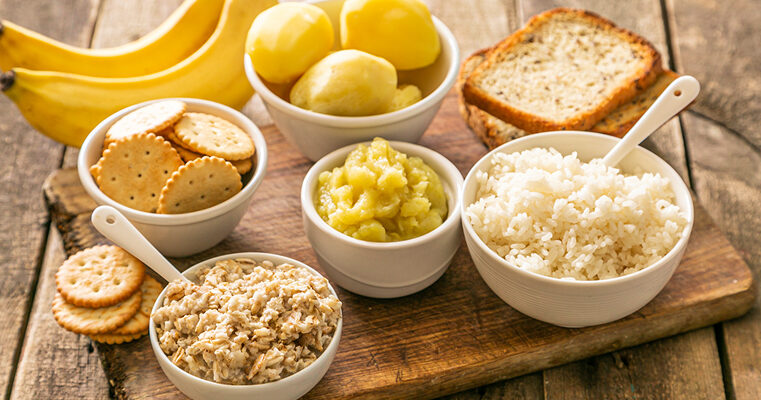
When your intestines are inflamed, you need to consume binding, low-fiber, and non-greasy foods.
These options pass gently through your digestive tract without drawing excess water into your stool or causing painful bowel spasms.
Following The BRAT Diet: Why It Works
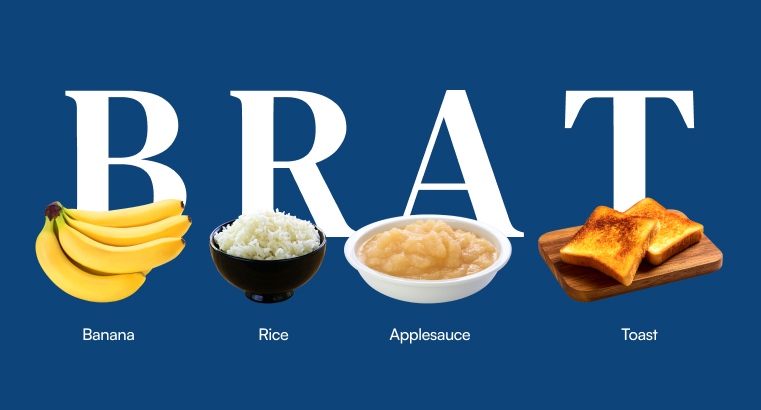
For decades, healthcare professionals have recommended the classic BRAT acronym as the foundational framework for stomach recovery.
This clinical approach functions beautifully.
That is because it has a full dependence on low-residue, bland items that place minimal mechanical strain on your gut walls.
BRAT In A Nutshell
| Food Item | Why It Works | Best Way to Eat It |
| B – Bananas | Packed with potassium to replace lost electrolytes and pectin to help firm up loose stools. | Ripe, plain, and thoroughly mashed. |
| R – Rice | Plain white rice is a low-fiber, easily digestible starch that provides quick energy without overworking the gut. | Steamed or boiled with zero butter, oils, or heavy spices. |
| A – Applesauce | Cooked apples are incredibly gentle on the stomach and contain natural binders to reduce bowel urgency. | Plain, unsweetened varieties with no added spices or chunks. |
| T – Toast | Plain white toast gives the stomach simple carbohydrates that absorb excess acid and liquids. | Dry or with a tiny pinch of salt; completely skip the butter and jam. |
Bananas
Bananas are exceptionally easy to break down and are packed with a valuable soluble fiber known as pectin.
Moreover, this acts as a sponge that absorbs excess liquid in your bowels.
Besides this, they offer a massive dose of potassium. This is an essential electrolyte that your body rapidly loses during repeated bathroom episodes.
Rice
The next item up in the BRAT diet is rice.
Plain and boiled white rice is considered an ideal source of easily accessible carbohydrates.
Since it is refined and very low in fiber, it will bind your stool together without forcing your intestines to work overtime to digest heavy whole grains.
Applesauce
Though eating a raw apple with the skin on introduces too much rough, insoluble fiber for a sensitive gut, applesauce is considered the perfect substitute.
The cooking process breaks down the tough cell walls while preserving the gut-soothing soluble pectin.
This helps in firming up your digestion safely.
Toast
Having dry and plain white toast offers your body quick energy without the interference of heavy fats or oils.
These can trigger a sudden gastrocolic reflex.
Also, try to keep it completely dry. That is because adding butter, margarine, or rich spreads will completely destroy its soothing benefits and irritate your stomach lining.
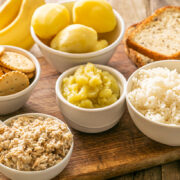
Some Other Bland And Safe Food You Can Include
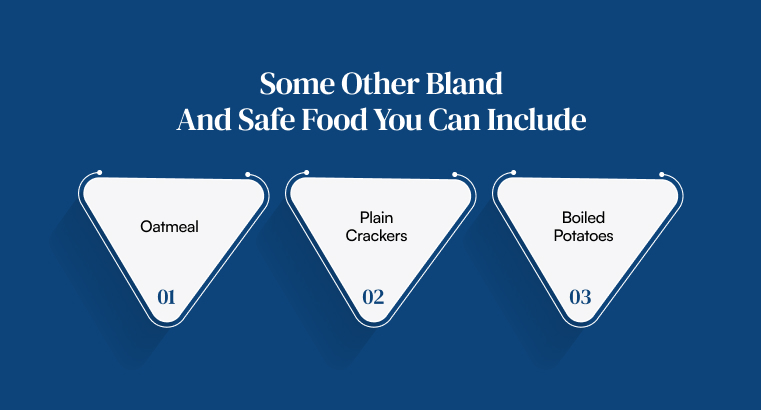
If you get tired of eating the basic BRAT selection, you may also safely expand your recovery meals.
Try adding these low-risk and easily digestible options into your daily menu.
Oatmeal
Oats cooked plain with water or some basic oatmeal is something that is comforting. It is also a warm source of soluble fiber.
Passing smoothly through the stomach, it will not scrape against the raw, sensitive patches of an inflamed intestinal lining.
Plain Crackers
Solid crackers and plain saltiness are fantastic snacks for absorption of excess stomach acids and settling feelings of nausea.
Their natural salt content also encourages your body to hold onto necessary fluids instead of flushing them out.
Boiled Potatoes
Plain boiled or steamed white potatoes that have the skins fully removed are packed with highly accessible carbohydrates and potassium.
Try to mash them with a small pinch of salt. However, try to avoid adding any milk, butter, or heavy spices.
Essential Hydration Strategies
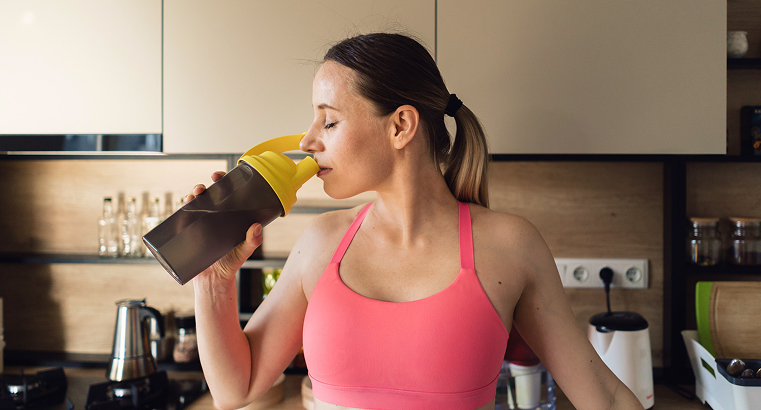
When you are dealing with a severe digestive flare-up, the absolute biggest threat to your safety is dehydration.
Your body is not just losing water. Instead, it is flushing out critical chemical salts that your heart and nervous system require to survive.
Replacement For Electrolytes
In order to rebuild your internal fluid balance, you must actively drink fluids that contain sodium, potassium, and glucose.
Lean heavily on over-the-counter oral rehydration (ORS) such as Pedialyte, which uses a precise clinical ratio to maximize water absorption in the intestines.
You can also sip clear chicken or vegetable broths in order to soothe your stomach, or use diluted sports drinks to keep your energy levels steady.
Fluids To Avoid
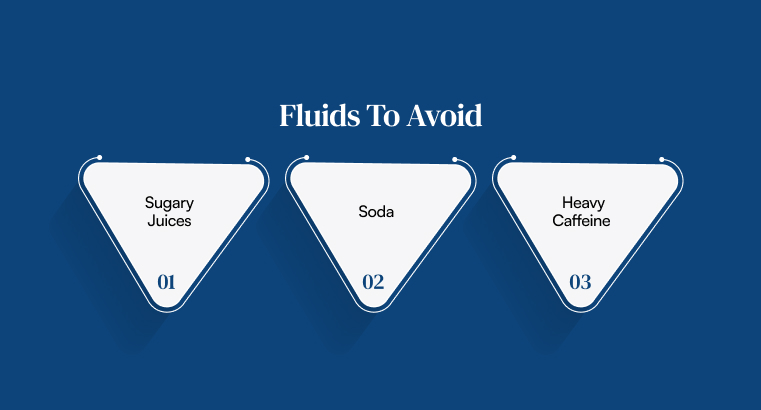
When you have diarrhea, you must ensure you avoid these.
Sugary Juices
When you drink full-strength apple, orange, or grape juice, it pulls massive amounts of water straight into your colon.
As a result, it makes your symptoms significantly worse.
Soda
The consumption of carbonated beverages will only introduce unnecessary gas bubbles into your GI tract.
Consequently, this only worsens your symptoms significantly.
Heavy Caffeine
Drinking black coffee and energy drinks acts as an aggressive intestinal stimulant.
This will only speed up your digestive transit time, forcing your bowels to evacuate even faster.
What NOT To Eat: High-Risk Trigger Foods To Avoid During Diarrhea
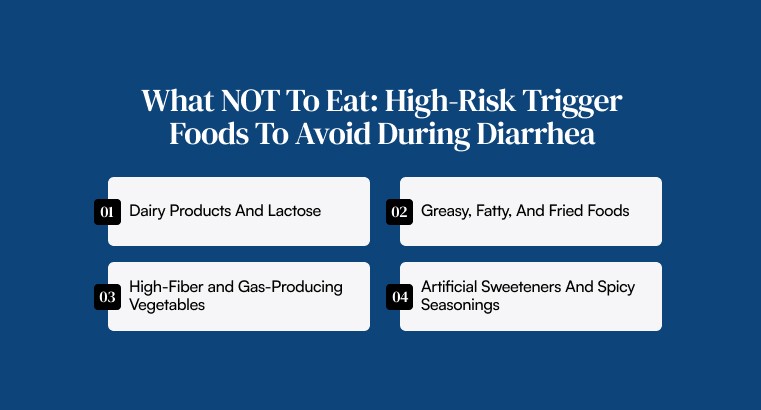
To give your digestive system the space it needs to heal, you need to fully cut out any foods that will require heavy chemical processing.
Also, avoid foods that cause internal gas expansion.
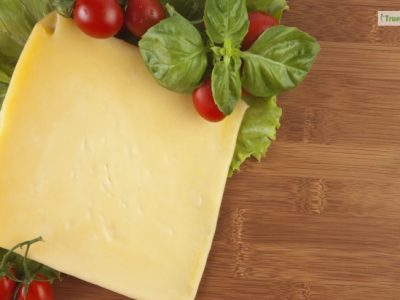
Dairy Products And Lactose
When your gut is inflamed by a stomach bug or food poisoning, your body temporarily stops its production of sufficient lactase.
Lactase is the specialized enzyme that is needed to break down dairy sugars.
So, when you have diarrhea and drink whole milk, eating cheese or indulging in some decadent ice cream will only result in severe bloating, explosive gas, and extended loose movements.
Greasy, Fatty, And Fried Foods
Heavy oils, fried chicken, fast food, and fatty cuts of meat allow stimulation of your stomach refluxes far too intensely.
Since a sensitive gut cannot absorb heavy fats efficiently, the undigested oils travel straight to your large intestine, creating greasy, watery stools.
High-Fiber and Gas-Producing Vegetables
While fiber is normally considered the king of gut health, it acts as an absolute irritant during an active episode of diarrhea.
Thus, try to avoid beans, broccoli, cabbage, onions, and Brussels sprouts until your digestion fully recovers.
These vegetables force your gut bacteria to create massive amounts of gas. This stretches your raw intestinal wall and triggers agonizing cramps.
Artificial Sweeteners And Spicy Seasonings
Consumption of sugar-free candies and gums consisting of sugar alcohols such as sorbitol, mannitol, or xylitol acts as a natural laxative. These draw water straight into your stool.
In a similar manner, heavy chilli powders, hot sauces, and complex spices irritate the unshielded lining of your stomach and intestines.
This results in immediate burning pain.
Recovery Phase: Easing Back into Normal Meals
As your stool starts to firm up and your natural appetite returns, rushing straight back into heavy, normal meals can easily cause a painful regression.
Your gut requires a slow, calculated transition phase.
The Rule of Small, Frequent Meals
Instead of shocking your system with three large, heavy meals, space your nutrition out into five or six micro-meals throughout the day.
Eating small portions ensures that your stomach always has a manageable volume of food to process.
This prevents sudden digestive overloads or unexpected cramping episodes.
Probiotics and Gut Flora Recovery
Once the active watery movements have stopped for a full 24 hours, you can begin rebuilding your flushed-out gut microbiome.
Thus, try and introduce mild, fermented options such as plain Greek yogurt or a light serving of kefir.
Just ensure that the yogurt you consume does not have any added sugars.
The live active cultures act as friendly companion bacteria.
These settle into your colon to crowd out lingering pathogens and restore absolute long-term digestive balance.
Red Flags: When to See a Doctor

The majority of sudden digestive flare-ups are self-limiting issues that resolve with proper rest and a bland diet.
However, certain severe symptoms flag a dangerous internal crisis.
You must contact a medical professional immediately or head to an urgent care centre if you experience the following:
- A high fever of over 102°F
- Notice black or bloody stools
- Show signs of severe dehydration
- Extreme dizziness and dry mouth
- Producing no urine
- Active symptoms fail to improve after 48 hours.
A Quick Summary
To keep your kitchen choices perfectly optimized while your body recovers, use this direct reference matrix to audit your daily meals.
| Foods You MUST Focus On (Safe Zone) | Foods You MUST Avoid (Danger Zone) | The Underlying Reason |
| Bananas, white rice, applesauce, and plain white toast. | Whole milk, heavy cheeses, ice cream, and butter. | A temporary lack of lactase enzymes means dairy will trigger severe gas and bloating. |
| Plain crackers, boiled potatoes (no skin), and plain oatmeal. | Fried chicken, French fries, greasy burgers, and heavy gravies. | Undigested fats pass straight to the colon, creating greasy, highly watery stools. |
| Oral rehydration solutions (ORS), clear chicken broth, and sports drinks. | Caffeinated black coffee, sugary fruit juices, and carbonated sodas. | Caffeine acts as an active bowel stimulant, while heavy sugars draw excess water into the stool. |
| Steamed carrots, plain baked chicken breast, and plain pasta. | Dried beans, raw broccoli, raw cabbage, and heavy hot sauces. | High-fiber veggies create massive internal gas expansion that triggers painful cramps. |
Navigate Your Digestive Crisis Successfully
Trying to navigate a sudden digestive crisis takes deliberate patience along with a strict shift away from aggressive heavy meals.
Your internal network cannot maintain its vital fluid balance when its delicate walls are being continuously irritated by high-fat loads or complex sugars.
Running an honest assessment of your current hydration levels, along with prioritizing low-fiber binding staples such as the classic BRAT menu, can help.
Moreover, try to keep your recovery foods entirely free of heavy oils.
In this way, you can successfully shorten your sickness timeline.
So, try to take it one small meal at a time while listening closely to your internal feedback loop.
In conclusion, following a proper diet will help you restore your digestive health with confidence.
Disclaimer: The information provided in this article is for general informational purposes only. It does not, and is not intended to, constitute medical or health advice. Please consult a qualified healthcare professional for medical guidance or expert health assistance.
References
- Cleveland Clinic. (2023). What to eat when you have diarrhea. Cleveland Clinic.
- Cleveland Clinic. (2026). Diarrhea. Cleveland Clinic.
- Gotter, A. (2026). What to Eat and Avoid with Diarrhea. Healthline.
- The Oregon Clinic. (2026). BRAT Diet | The Oregon Clinic. Oregon Clinic.
- Siloam Hospitals Medical Team. (2026). Fruits for diarrhea: Which ones are safe to eat? Fruits for Diarrhea: Which Ones Are Safe to Eat? Siloam Hospitals.
What is your reaction?