
 By
Working out is an important activity that helps you build muscle mass and protects your joints, while helping you keep your strength and balance as you age.
Not only can you build strength, but also stay fit and healthier.
However, what you do afterward holds significance as well.
A lot of people think that building muscles and working out at the gym just ends the chapter of fitness.
That is a wrong concept.
Here, muscle recovery plays a key role in staying healthy as well as making good progress in the overall journey of fitness.
When you have a deep understanding why muscle recovery is truly important, you can do the following:
- Avoid injuries
- Reduce soreness
- Improve overall performance
But here is the thing. Muscle recovery is easier with proper nutrition that is specifically for that purpose.
With the help of proper nutrition, you can ensure proper muscle recovery while repairing microscopic fiber damage and restoring depleted energy reserves.
So, what is the best recovery food for your muscles?
We will cover exactly that in this guide, along with understanding the importance of muscle recovery and the key ways to support it.
Besides this, we will also evaluate what you should avoid to achieve better muscle recovery.
What Exactly Is Muscle Recovery
Before we delve deep into what is the best recovery food, let us first understand the concept.
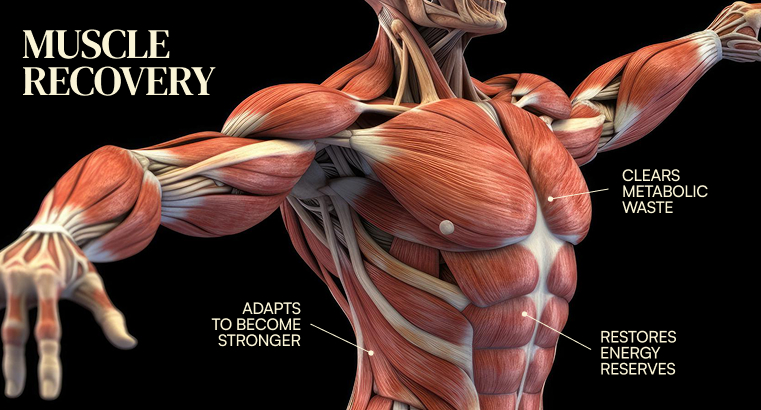
Muscle recovery is known as the biological process through which your body repairs microscopic tears in muscle fibers caused by exercise. It also does the following:
- Clears metabolic waste
- Restores energy reserves
- Adapts to become stronger
So, basically, the process is where your muscles repair themselves after being stressed by exercise.
When you work out, tiny tears start to form in your muscle fibers. This is especially applicable in cases where you are doing resistance training such as weight lifting.
It may sound scary, but actually it is a significant aspect of getting stronger.
Importance Of Muscle Recovery: Why It’s Needed
When you take sufficient time to let your muscles recover after workouts, you get a variety of benefits.
One of the primary benefits of proper muscle recovery is the reduction of muscle soreness.
When you are finished with a tough workout, you might feel sore for a day or two. This is called Delayed Onset Muscle Soreness (DOMS).
Conversely, with the help of appropriate recovery techniques, you can decrease this soreness while being able to move comfortably again.
For instance, you can stretch or use foam rollers.
You can also prevent injuries effectively. If your muscles do not get sufficient time and a proper chance to heal, you increase your risk of getting hurt.
Moreover, when you overwork your muscles, they have a greater likelihood of tearing or straining.
As a result, you can be out of your fitness routine for weeks or even months.
The enhancement of your performance is one of the bigger advantages. When you ensure that your muscles are well-rested and fully recovered, you can perform better.
Ultimately, ensuring proper muscle recovery has a positive effect on your well-being as well as your health, including:
- Run faster
- Lift more
- Achieve more in workouts
- Improve endurance
- Reduce stress levels
- Improve your sleep
- Support a healthier immune system
- Boost fitness and overall health
Key Ways To Support Muscle Recovery
In order to support muscle recovery, you need a proper combination of sufficient nutrition, hydration, quality sleep, and active movement.
This allows better repair of micro-tears and reduces soreness.
| Recovery Method | Description | Recommendations & Sources |
| Protein Intake | Rebuilds damaged muscle fibers. | Consume 1.4 to 2.0 g/kg of body weight daily (or ~0.36 g/lb) Sources: eggs, chicken, fish, or plant-based options |
| Carbohydrate Replenishment | Restores depleted muscle glycogen stores. | Eat post-workout carbohydrates Sources: whole grains, fruits, or oats |
| Hydration and Electrolytes | Helps cells flush out metabolic waste and prevents cramping. | Drink plenty of water throughout the day Consider electrolyte-rich options or sports drinks after heavy sweating |
| Quality Sleep | Maximizes muscle protein synthesis and hormonal balance. | Get 7 to 9 hours of nightly sleep Focuses on deep sleep |
| Active Recovery | Boosts blood flow and clears out stiffness without overworking the body. | Perform low-intensity movement on rest days Examples: brisk walking, easy cycling, or gentle yoga |
| Targeted Supplements | Complements a balanced diet if whole-food intake falls short. | Use evidence-based options Examples: creatine monohydrate or whey protein isolate |
| Physical Therapies | Manages delayed-onset muscle soreness (DOMS) and eases tight tissues. | Apply physical recovery modalities Methods: foam rolling, massage therapy, or cold/heat therapy |
What Is The Best Recovery Food For Your Muscles?
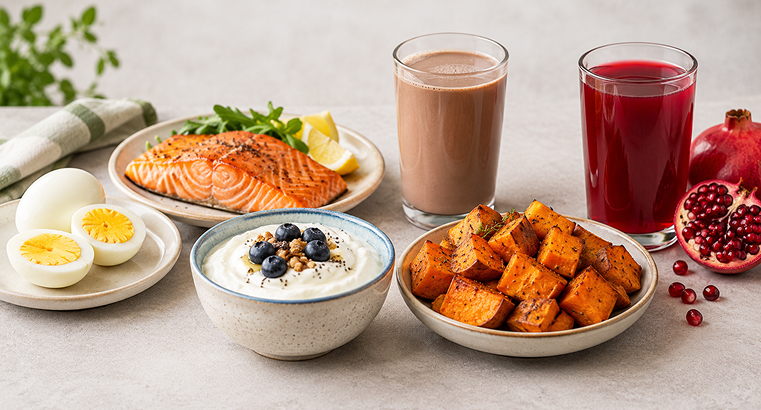
To make the choice for the right post-workout fuel, your primary focus should be on a mix of high-quality proteins and complex carbohydrates.
Proteins supply the essential amino acids needed to rebuild torn muscle fibers. Meanwhile, carbohydrates replenish the glycogen stores that you have burned through exercise.
When it comes to the right post-workout fuel, your body has very specific biological needs.
To optimize your post-exercise nutrition, you should always focus on the “3 Rs”: Repair, Refuel, and Rehydrate.
- Repair with protein
- Refuel with carbohydrate
- Rehydrate with fluids and electrolytes
Muscle Recovery Foods At-A-Glance
Before we dive deep into the details, here is a quick overview of the top choices to add to your post-workout plate.
| Recovery Food/Drink | Primary Benefit | Key Nutrient | Quick Example |
| Whole Eggs | Stimulates muscle protein synthesis | Bioavailable protein & healthy fats | Hard-boiled eggs |
| Fatty Fish | Lowers muscle soreness & provides protein | Omega-3 fatty acids | Grilled salmon or sardines |
| Dairy Products | Rebuilds muscle and rehydrates the body | Whey/casein protein, carbs & sodium | Greek yogurt or chocolate milk |
| Starchy Vegetables | Refills empty energy reserves | Complex carbohydrates | Roasted sweet potatoes |
| Pomegranate Juice | Fights post-exercise inflammation | Polyphenols (antioxidants) | 250 ml of 100% pure juice |
High-Quality Proteins For Muscle Repair
When you strain your muscles during a workout, you create tiny, microscopic tears in the muscle fibers.
High-quality proteins offer amino acids, which act as cellular building blocks. This helps to:
- mend this damage
- kickstart muscle protein synthesis
- allow your tissues to grow back stronger
Whole Eggs
Yes. The whole egg.
People usually throw away the yolk. But do not do that.
While many fitness enthusiasts only eat egg whites, as per research, whole eggs are significantly better for muscle repair.
The yolk contains vitamins, minerals, and healthy fatty acids that actively boost muscle protein synthesis.
Fatty Fish
Fish such as salmon, trout, and sardines offer a powerful double-benefit. Moreover, they offer highly bioavailable protein that your body can easily absorb.
They are also packed with omega-3 fatty acids, which help fight off delayed-onset muscle soreness (DOMS).
Lean Poultry
Chicken and turkey are classic recovery staples for a reason.
They deliver a concentrated dose of lean protein without excessive fat, ensuring your muscles get pure building blocks right after a grueling training session.
Nutrient-Dense Carbohydrates To Replenish Glycogen

Your body uses a stored form of sugar known as glycogen as its primary fuel source during intense exercise.
Once a workout drains these energy reserves, eating carbs promptly refills those empty fuel tanks.
In this way, your body does not begin breaking down its own muscle tissue for energy.
Starchy Vegetables
Intense workouts quickly drain your muscles of glycogen, which is the stored form of glucose your body uses for energy.
To replenish these reserves and keep your performance high, look to starchy vegetables like sweet potatoes, butternut squash, and regular potatoes.
They offer clean, complex carbs that are easy on the stomach.
Recovery Drinks For Hydration And Inflammation
Through sweating, you lose both water and crucial minerals such as sodium and potassium.
Rehydrating after a workout restores optimal circulation, prevents muscle cramping, and helps your bloodstream efficiently flush out metabolic waste products.
This includes lactic acid that causes post-workout stiffness.
Milk And Dairy Products
Cottage cheese, Greek yoghurt, and even regular cow’s milk make perfect recovery snacks.
Because they naturally combine both proteins and carbohydrates, they support muscle growth while refilling glycogen stores simultaneously.
Surprisingly, low-fat chocolate milk is also an excellent option.
This is because it contains an ideal balance of fluids, macronutrients, and electrolytes to help flush out lactic acid.
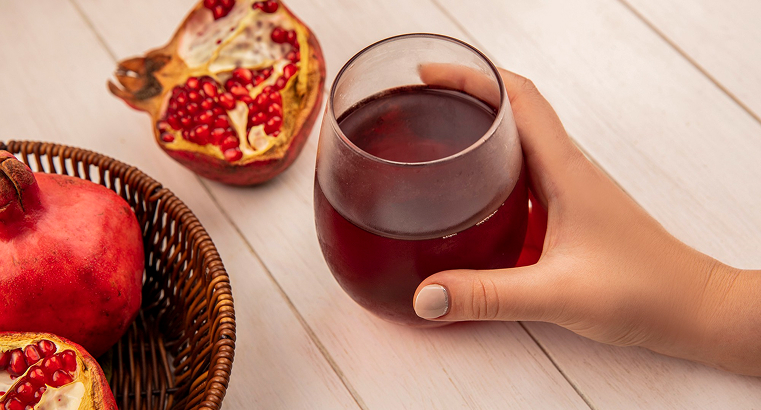
Pomegranate Juice
If you prefer a plant-based beverage, tart pomegranate juice is a fantastic choice.
It is loaded with polyphenols, which are plant compounds known to combat oxidative stress and minimize post-workout inflammation.
Drinking a small glass daily can noticeably speed up how fast your strength returns.
Now that you know what to load up on, it is equally crucial to understand what might be holding your progress back.
Let’s look at what you need to cut out to protect your hard work.
Things To Avoid For Better Muscle Recovery
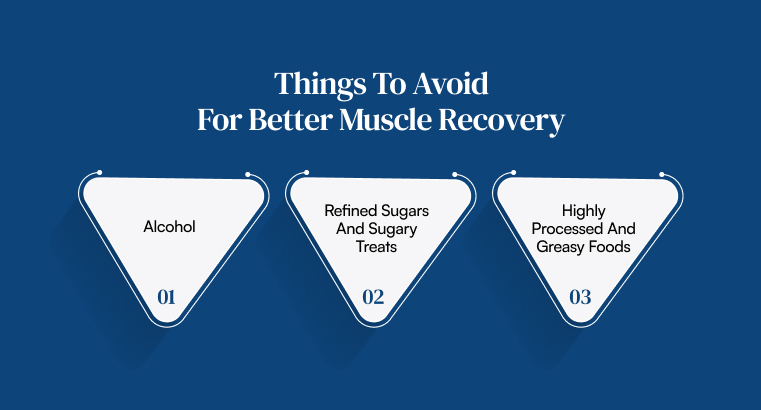
Knowing what to eat is definitely essential. However, knowing what to avoid is just as critical.
Moreover, consumption of the wrong things can delay cellular repair, trigger unnecessary internal stress, and actively undo the hard work you put in during your workout.
Alcohol
When you reach for an alcoholic drink after a tough workout, it is one of the quickest ways to stall your progress.
Alcohol directly impairs muscle protein synthesis. This means it blocks your body from using protein to repair those micro-tears in your muscles.
Additionally, alcohol acts as a diuretic, dehydrating your cells and leaving you far more prone to painful muscle cramps.
Refined Sugars And Sugary Treats
Your body needs carbohydrates after a workout. However, trying to get them from pastries, donuts, or candy bars is counterproductive.
Foods that are high in refined sugars cause massive spikes and sudden drops in blood sugar. As a result, this leaves you feeling fatigued.
Even worse, refined sugars trigger systemic inflammation in the body.
This can actually increase muscle soreness and make your recovery window take significantly longer.
Highly Processed And Greasy Foods
It can be tempting to reward yourself with fast food or deep-fried items after burning a lot of calories, but these should be avoided during your recovery window.
Heavy, greasy meals are packed with low-quality trans or saturated fats that provoke inflammation.
Because fat slows down digestion, these foods delay your stomach from processing and delivering the crucial proteins and carbs your aching muscles desperately need.
Rest, Fuel, And Hydrate
Optimal muscle recovery is not about a single “magic food” or drink.
However, a holistic lifestyle routine built around a few foundational habits.
While dialing in your post-workout nutrition is essential, no amount of perfect eating can replace actual rest.
You should aim for seven to nine hours of quality sleep nightly.
That is because this is the exact window when your body releases the peak amount of growth hormones required to rebuild torn muscle tissue. Besides, these hormones are responsible for restoring your natural hormonal balance.
To maximize the benefits of your nutrition, try to eat a balanced recovery meal containing both high-quality protein and complex carbohydrates within one to two hours after your workout.
This is when your muscle cells are most receptive to absorbing nutrients and jumpstarting the repair process.
Alongside your food, make sure you are hydrating steadily throughout the day rather than treating it as a one-time event right after a workout.
Keep an eye out for signs of dehydration like dark urine or muscle twinges. Moreover, consider incorporating natural electrolytes via dairy, watermelon, or coconut water if you had an especially sweaty session.
By consistently syncing your rest, fueling, and hydration, you give your body exactly what it needs to rebuild.
Disclaimer: The information provided in this article is for general informational purposes only. It does not, and is not intended to, constitute medical or health advice. Please consult a qualified healthcare professional for medical guidance or expert health assistance.
References
- Richter, A. (2026). 6 Best foods and drinks for muscle recovery. Healthline.
- Idaho Sports Medicine Institute. (2024). Why Muscle Recovery Is Important After Workouts. Idaho Sports Medicine Institute.
- Ryt, J. B. C. (2024, April 25). 12 Best foods to eat for muscle recovery. GoodRx.
What is your reaction?