By
You get up from the sofa, and the room fades out at the sides.
Your ears are ringing, your legs are hollow, and for a few seconds you know you will fall.
Also, you are probably at or just past the point of looking for ways to raise blood pressure right now at home.
Most of the sudden drops are short and harmless, and a few simple moves can get you back in a matter of minutes.
But a low reading is sometimes a warning sign, so it helps to know which situation you’re in.
This guide explains what low blood pressure is, the quickest safe steps to take, foods and drinks that can help, what to avoid, and when to seek help.
What Counts As Low Blood Pressure?
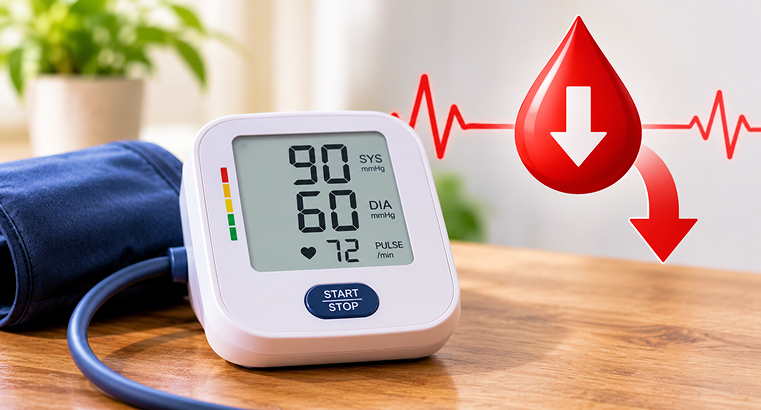
Blood pressure is the pressure of blood against the walls of the arteries.
If it drops too low, the brain and other organs receive less blood and symptoms result. Hypotension is typically defined as a blood pressure below 90/60 mmHg.
But it is not as important as how you feel. Some people can live at 95/60, others at 105/70.
Numbers And Symptoms
Dizziness, lightheadedness, blurred vision, weakness, nausea, and fatigue are common symptoms of low blood pressure.
Others experience confusion or faintness. If you feel well at a low reading, you don’t need treatment.
On the other hand, if you experience symptoms, the following may help, and you should retest with a home monitor after 15 minutes.
The Reason For Its Sudden Drop
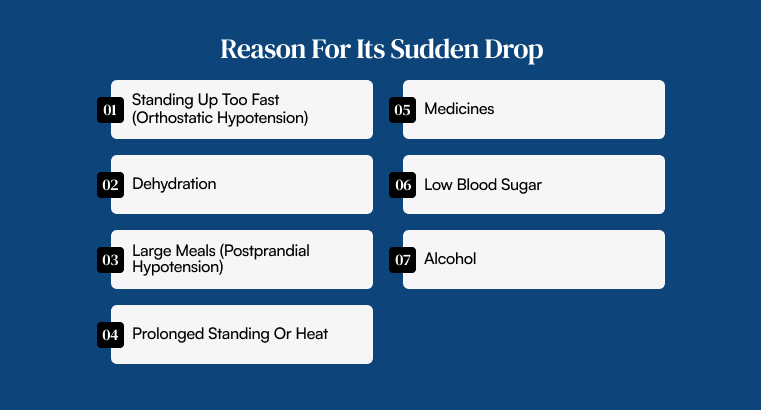
There are a number of common causes that lead to a rapid drop.
The most common ones are presented in the table below.
| Trigger | What Happens | Typical Clue |
| Standing up too fast(orthostatic hypotension) | Blood pools in the legs before the body adjusts | Dizziness within seconds of standing |
| Dehydration | Less fluid means lower blood volume | Thirst, dark urine, after sweating, vomiting, or diarrhea |
| Large meals (postprandial hypotension) | Blood is diverted to the gut | Lightheaded 30 to 60 minutes after eating |
| Prolonged standing or heat | Blood pools and vessels widen | Faintness in hot rooms or long queues |
| Medicines | Blood pressure drugs, diuretics, antidepressants, and others | Started or changed a dose recently |
| Low blood sugar | Weakness, shakiness, sweating | Skipped meals, diabetes treatment |
| Alcohol | Widens vessels and dehydrates | After drinking |
To raise blood pressure immediately at home, the first five minutes is the most important.
The first five minutes are the most important when it comes to raising blood pressure immediately at home.
Once symptoms strike, the aim is to restore blood flow to the brain as soon as possible.
These steps are quick, require no equipment, and are safe for most healthy adults.
Begin with the first one as it is the most effective.
Lie Down And Raise Your Legs
While lying flat, rest legs on a pillow or chair above heart level. Blood is then pushed back up to your heart and brain by gravity.
Most people feel better within minutes. If lying down is not possible, then sit and lean forward with your head towards your knees.
Stay put for at least 10 minutes, and then get up slowly.
Use Leg-Crossing And Muscle Tension
Physical counter-maneuvers help when stuck standing, such as in a queue or on a train.
Now, cross your legs in a scissor position and squeeze your thighs and buttocks. You can also clench your fists, or tense your arms by pulling your hands apart.
These actions expel blood from the veins of the limbs and push it up.
Additionally, research on those who tend to faint easily has demonstrated that they can increase pressure by a few points in a few seconds.
Drink Water, And Drink It Quickly
A large glass of cool water (16 ounces or 500 ml) can cause a rise in blood pressure in 5 to 15 minutes, with the effect reaching its maximum around 30 minutes.
This is particularly effective if the dehydration is due to a lack of water. Also, remember to take it slow and do not sip it.
Add A Little Salt, If It Is Safe For You
Sodium retains water in the body, increasing blood volume. A little extra salt, like a handful of pretzels or olives, or a cup of broth, is a mild boost.
For individuals who suffer from chronic low blood pressure, some physicians recommend taking extra salt.
But absolutely avoid doing this if you have high blood pressure, heart failure, kidney disease, or have been advised to reduce sodium.
Have A Cup Of Coffee Or Tea
Caffeine triggers a temporary increase in blood pressure, typically within 30-60 minutes and for a few hours.
One cup is plenty. Regular coffee drinkers experience less of an effect, and excessive amounts can cause palpitations or anxiety.
Eat Something If You Are Hungry
Low blood sugar might be a factor if you’ve missed a meal.
A small snack of carbohydrates and a little protein, such as a banana and peanut butter or toast and cheese, will help in about 15 minutes.
The opposite is true after a big meal. Thus, take a nap after eating, instead of eating more.
| Action | How Fast | Best For | Caution |
| Lie down, legs raised | 1 to 5 minutes | Almost any sudden dizziness | Get up slowly |
| Leg-crossing and muscle tensing | Seconds | Faint feeling while standing | Sit down if symptoms continue |
| 16 oz of water | 5 to 15 minutes | Dehydration, orthostatic drops | Don’t force it if nauseated |
| Salty snack or broth | 15 to 30 minutes | Low blood volume | Avoid with hypertension, heart or kidney disease |
| Coffee or tea | 30 to 60 minutes | Mild, brief low readings | Short effect; may cause jitters |
| Small snack | 15 minutes | Low blood sugar | Avoid large meals |
Foods And Drinks That Help Over The Next Few Hours
After the initial wave, the food and beverages you consume can help prevent a second drop in pressure.
There is no magic here, but some options make a consistent difference.
So, consider them as an aid to the quick fixes mentioned above.
What To Drink To Raise Blood Pressure Immediately At Home
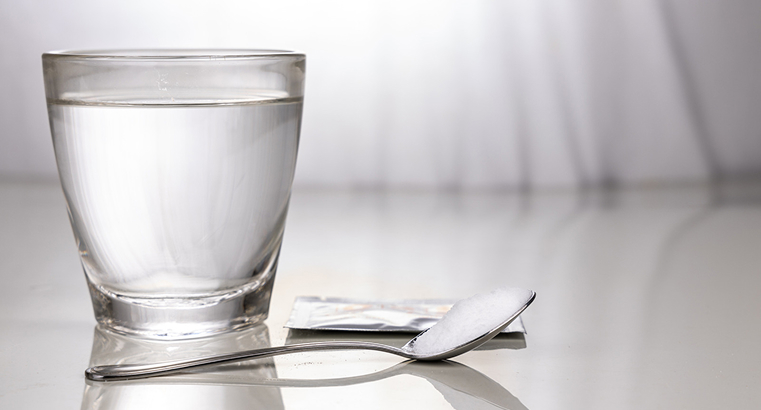
First, water, then drinks providing fluid and electrolytes. Oral rehydration drinks, broth, and sports drinks are a combination of sodium and water.
If you have diabetes, choose low-sugar versions. For a quick boost, drink tea or coffee, but avoid alcohol, as it has the opposite effect.
Foods That Support Blood Pressure
The foods that increase pressure the most are salty foods such as cheese, olives, canned soup and pickles; these are only suitable if your doctor has approved extra sodium.
Eggs, fish, leafy greens and fortified cereals are high in vitamin B12 and folate, which can prevent anemia, which can lead to low blood pressure.
Lean meat, lentils and spinach are foods that contain iron and do the same.
Small, frequent meals are preferable to a few large meals, especially when you fall down after eating.
What Not To Do When Your Blood Pressure Is Low
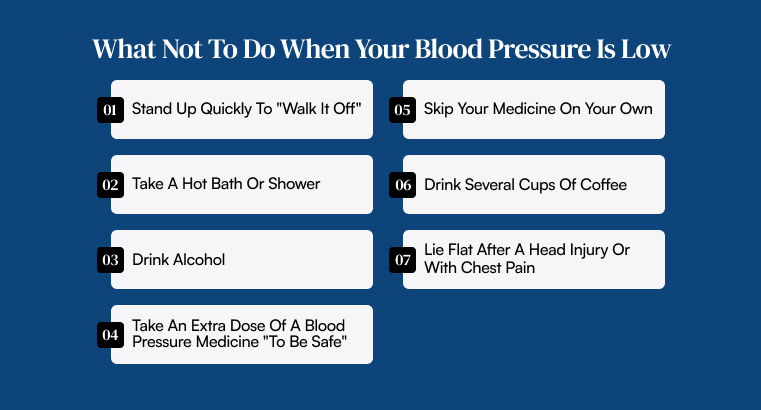
There are some instincts that make things worse. The remedies are important, but so are the mistakes that are avoided.
| Don’t | Why |
| Stand up quickly to “walk it off” | You may faint and fall |
| Take a hot bath or shower | Heat widens blood vessels and lowers pressure |
| Drink alcohol | It dehydrates and relaxes vessels |
| Take an extra dose of a blood pressure medicine “to be safe” | It will lower pressure further |
| Skip your medicine on your own | Talk to your doctor first |
| Drink several cups of coffee | It can cause palpitations and a rebound drop |
| Lie flat after a head injury or with chest pain | These need emergency care |
Preventing Sudden Drops: Habits That Help
When low blood pressure recurs, there’s no quick fix. The goal is to avoid the dips, and most prevention is easy.
These habits are helpful, particularly with orthostatic and postprandial hypotension.
Change Position Slowly
Sit on the edge of the bed for 1 minute before getting up. When getting up from a chair, bend your calves and squeeze your thighs.
If you wake up at night, stop, count to 10, and then walk. Elevating the head of the bed a few inches can also help minimize dizziness in the morning.
Drink plenty of water and consume smaller portions of food.
Drink lots of water and take small bites of food.
Moreover, consume water gradually throughout the day, and more often on hot days, when sick or after exercise.
Try to have smaller meals, and avoid refined carbs as these divert blood flow to the gut. Ultimately, reduce alcohol intake and do not get up immediately after eating.
Consider Compression
Waist-high compression stockings or an abdominal binder prevent blood from accumulating in the legs and abdomen.
Doctors recommend them for people with recurrent orthostatic hypotension. A fitted pair is better than loose socks.
Who Needs Extra Care
Home repairs should be done with greater care by some. What works for one person may not work for another.
People With High Blood Pressure Or Heart And Kidney Disease
A blood pressure reading that appears “low” to you could be higher than 90/60 if you are a person who normally has high blood pressure.
Never add salt without consulting the cook. Check with your doctor to see what is safe and if your medications need to be adjusted.
This is true also for heart failure and kidney disease, in which excess salt and fluid can be detrimental.
Pregnancy And Older Adults
Dizziness is common, and blood pressure may decrease during early pregnancy. Small meals, fluids and rest will generally help. However, report fainting or heavy bleeding immediately.
Drops are more common in older people, particularly after taking medicines or eating, and falls are more likely to be serious.
If dizziness occurs often, consult a doctor or pharmacist about all medicines.
When To See A Doctor
If you experience dizziness, repeated fainting or low readings with symptoms, please make an appointment.
In case, the problem started after a new medicine was used or if a low reading is accompanied by fatigue and weight loss, do so as well.
Your doctor might look for dehydration, anemia, thyroid problems, adrenal insufficiency, diabetes, or heart rhythm problems, and may change your medicines.
If low blood pressure occurs with any of the following, call emergency services:
- Chest pain, shortness of breath, or a fast and weak pulse
- Unsteadiness, slurring, or passing out that does not resolve
- Pupils that are constricted and pale
- Fever, severe infection, or symptoms of sepsis
- Black or bloody stools, vomiting blood, or heavy bleeding
- Swelling of the face or throat or hives following a bite, food or medication
- Head injury or severe abdominal pain
None of these are treatable with a glass of water, and they may indicate shock, internal bleeding, serious infection, or allergic reaction.
There is a simple procedure to immediately raise blood pressure at home: lie down, elevate the legs, drink water, and check in 15 minutes.
With full recovery, you can return to normal. Otherwise, or if it continues, it’s a warning, and a warning worth heeding.
Disclaimer: The information provided in this article is for general informational purposes only. It does not, and is not intended to, constitute medical or health advice. Please consult a qualified healthcare professional for medical guidance or expert health assistance.
References
- American Heart Association. (2024, May 6). Low blood pressure – when blood pressure is too low. American Heart Association.
- Low blood pressure | NHLBI, NIH. (2022, March 24). NHLBI, NIH.
- Chen, R. J., Sharma, S., & Bhattacharya, P. T. (2025, May 3). Hypotension. StatPearls – NCBI Bookshelf.
- (2019). Looking for Trouble: Identifying and Treating Hypotension. Pharmacy and Therapeutics, 44(9), 563. PubMed Central.
What is your reaction?