By
When you’re backed up, patience is often the first thing to go.
Late-night searches for a quick fix are common, and the internet is full of promises that one fruit or drink will fix everything in minutes.
The truth is more useful than the hype.
So you may be asking this in a panic. And quite honestly, with plenty of frustration:
What foods help relieve constipation immediately?
A handful of foods can get things moving within a few hours, while others may take a day or two.
With that in mind, here’s a guide you can follow.
We will explain how fast food can realistically work, which options have solid evidence behind them, which ones you should avoid, and when you need a doctor instead of a snack.
How Fast Can Food Really Work?
First, you need to understand how your stool works. Stool takes time to move through the colon.
Moreover, no food can speed up the whole process in just a few minutes.
However, food can definitely help you in the following ways:
- Soften stool
- Add bulk
- Draw water into the bowel
- Stimulate the muscle contractions that move it along
Some effects may begin within an hour. On the other hand, others tend to develop over several days.
So, the knowledge of this very difference can help you in making the right choice while avoiding frustrations.
Why “Immediately” Is Relative
The colon moves stool along in slow waves. That is, with stronger contractions after meals and in the morning.
Certain foods and drinks speed this up, mostly by stimulating those contractions or by pulling water into the stool.
In practice, “immediate” usually means a bowel movement within a few hours. However, foods rich in fiber alone tend to take longer, often a day or more.
What Foods Can Help With Constipation Immediately? A Realistic Timeline
Below, the table ranks common options by how quickly most people notice an effect.
The individual results may vary. Thus, use these times ar rough guides.
| Food Or Drink | Typical Time To Work | How It Works |
| Coffee or a warm drink | 15 minutes to 1 hour | Stimulates colon contractions |
| Prune juice or prunes | 4 to 12 hours | Sorbitol draws water into the bowel |
| Pears and apples with skin | 6 to 24 hours | Sorbitol and fiber soften stool |
| Kiwi | 1 to 3 days with daily use | Fiber and an enzyme that aids motility |
| Oats, chia, or flaxseed with water | 12 to 48 hours | Soluble fiber forms a soft gel |
| Beans and lentils | 1 to 3 days | Bulk and fermentable fiber |
What Foods Can Help With Constipation Immediately? The Fast-Acting Options
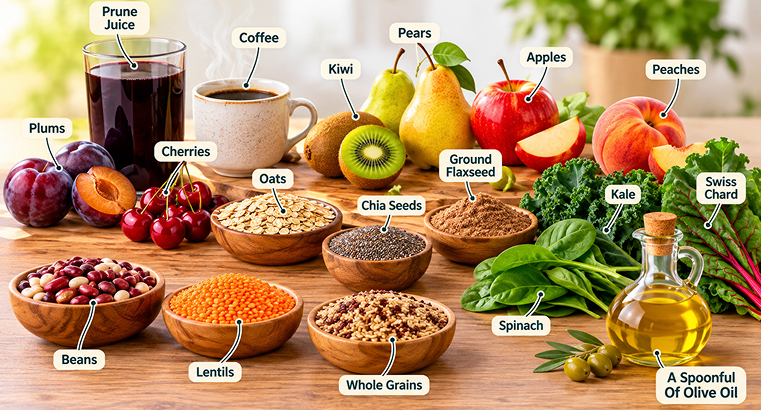
In case you need relief today, try to start with foods that can act quickly on your bowels.
Moreover, they work in different ways. So, when you combine one or two, it usually works better than having a dependence on just one.
Try to drink plenty of fluids as well. The reason is that fiber and sorbitol need water to work.
Prunes And Prune Juice
Considered as the most thoroughly studied food for constipation.
Moreover, they contain fiber and sorbitol, which is a sugar alcohol that draws water into the intestine, softening the stool.
According to some studies, there were about 50 grams of prunes, which were roughly five to six, used twice a day were found to work as well as or better than psyllium.
If you prefer juice, start with 4 ounces and increase to 8 ounces if needed. Increase the amount gradually, since too much can cause cramps and urgent diarrhea.
Coffee And Warm Liquids
For a variety of people, a hot cup of coffee tends to trigger a bowel movement within minutes.
Next, coffee stimulates the colon, and even decaf has a milder effect. This suggests that caffeine is not the only factor here.
In general, warm drinks, including hot water with lemon or herbal tea, can trigger the gastrocolic reflex. This is the overall natural urge of your gut to move after the stomach fills.
Coffee can also irritate the stomach or worsen reflux for some people, so have it with food if it bothers you.
Kiwi
Several trials have shown that eating two green kiwis a day can increase stool frequency and soften stool.
Moreover, these results are usually apparent within a few days and sometimes sooner.
Kiwi provides fiber and water, and contains an enzyme called actinidin that may aid digestion and gut movement.
Furthermore, eat the flesh and the skin too if you like, for extra fiber. Kiwi is gentle and suits most adults and many children.
Pears, Apples, And Other Fruits With Sorbitol
Pears, apples, peaches, plums, and cherries contain sorbitol and fruit sugars that stay in the gut and draw in water.
A pear or apple eaten with the skin provides both soluble and insoluble fiber.
In addition, a medium pear has about 5.5 grams of fiber, and a medium apple about 4.5. Fresh fruit is a better choice than fruit canned in syrup or sweetened juice.
Oats, Chia Seeds, And Ground Flaxseed
These work more slowly than prunes.
However, they are considered to be among the most reliable ways to soften stool.
Oats and chia contain soluble fiber that forms a soft gel in the gut. On the other hand, ground flaxseed adds fiber and may gently lubricate the stool through its oils.
Stir a tablespoon of chia or ground flax into oatmeal or yogurt, and drink a full glass of water with it.
Without enough fluid, these foods can backfire and make stool harder.
Leafy Greens And Cooked Vegetables
Spinach, kale, and Swiss chard add bulk and provide magnesium, which draws water into the bowel.
Cooked vegetables are easier to eat in larger amounts and often feel gentler than raw salads when you’re already bloated.
Broccoli, Brussels sprouts, and sweet potatoes with the skin are also good choices.
Beans, Lentils, And Whole Grains
A cup of cooked lentils or black beans provides around 15 grams of fiber – more than most people eat in a day.
These foods work more slowly and can cause gas, so increase portions gradually.
Whole grains such as brown rice, barley, and whole wheat bread provide steadier fiber over time.
A Spoonful Of Olive Oil
A tablespoon of olive oil may lubricate stool and make it easier to pass, and some people use it as a gentle home remedy.
Evidence is limited, and larger amounts can cause nausea or loose stool, so keep the portion small and take it with food.
How Much Fiber And Fluid Do You Need?
Most adults eat far less fiber than they need.
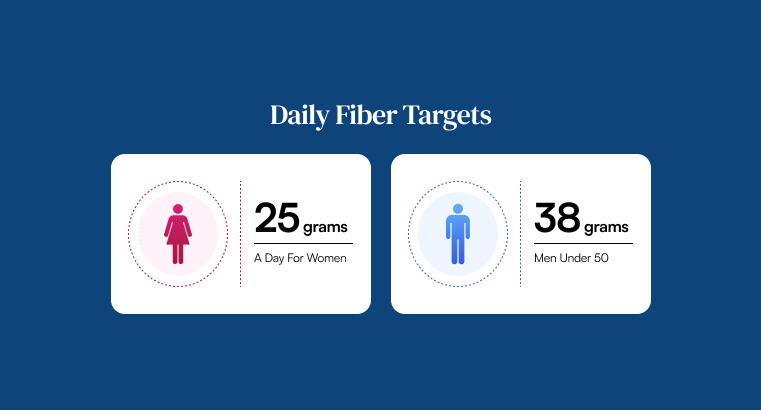
The general target is about 25 grams a day for women and 38 grams for men under 50, with slightly lower targets for older adults.
Fluid matters just as much, because fiber without water can add bulk to dry stool.
Also, increase both gradually for the safest approach. That is because a sudden increase can cause gas, bloating, and cramping.
| Food (Typical Serving) | Approximate Fiber |
| Lentils, cooked (1 cup) | 15 g |
| Black beans, cooked (1 cup) | 15 g |
| Chia seeds (2 tablespoons) | 8 to 10 g |
| Raspberries (1 cup) | 8 g |
| Pear with skin (medium) | 5.5 g |
| Apple with skin (medium) | 4.5 g |
| Oatmeal, cooked (1 cup) | 4 g |
Fiber works best when you spread it throughout the day.
Try out the following options:
- Oats at breakfast
- Fruit for a snack
- Beans or greens at dinner
These can help more than having one large serving of fiber at night.
Foods And Drinks That Make Constipation Worse
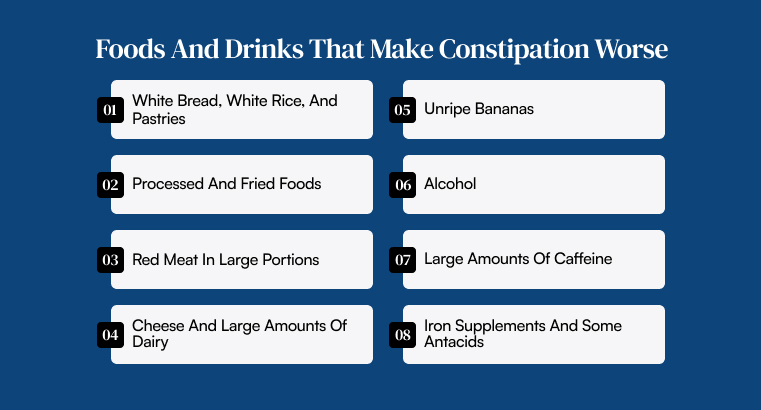
Some foods are there that can slow down your digestion or can even make your stool harder and drier. Ultimately, this just ends up setting back your progress.
You do not need to avoid them completely. However, try to go easy until things are moving again.
Below is a list of common offenders.
| Food Or Drink | Why It Can Worsen Constipation |
| White bread, white rice, and pastries | Low in fiber, so stool stays small and hard |
| Processed and fried foods | High in fat, low in fiber, and slow to digest |
| Red meat in large portions | Contains no fiber and displaces plant foods |
| Cheese and large amounts of dairy | Can firm up stool in some people |
| Unripe bananas | The starch can be binding, while ripe ones are fine |
| Alcohol | Dehydrates the body and slows the gut |
| Large amounts of caffeine | Can dehydrate you if you drink little water as well |
| Iron supplements and some antacids | Common medicine-related causes |
A Small Note: Bananas And Dairy
Note one thing at all times. Dairy affects people differently, and for some it clearly slows the bowel, so try cutting back for a few days and see.
Usually, bananas are often called binding. However, that mostly applies to unripe ones.
In fact, a ripe banana has more soluble fiber and sugar and is usually fine, so judge by how your own gut reacts.
Simple Habits That Make The Foods Work Faster
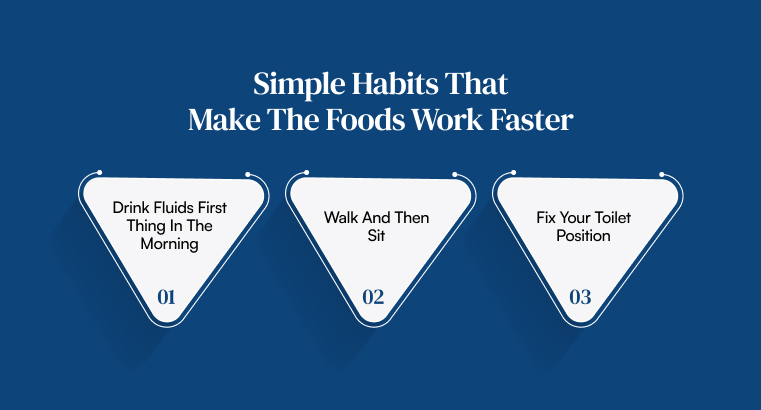
It is not just food that can help you out. While food does its job, it will be able to do its best work when you give your gut some help.
Not only are these habits free, but they also cost you only a few minutes. Together, they can help you make a real difference in how you can get fast relief.
Drink Fluids First Thing In The Morning
It is recommended to drink a large glass of warm water when you wake up, followed by breakfast. This will, in turn, trigger the gastrocolic reflex, which is the gut’s natural urge to move after the stomach fills.
Now, try pairing it with prunes, kiwi, or oats. This gives your bowel a strong signal. As a simple hydration check, you may aim for pale yellow urine throughout the day.
Walk And Then Sit
When you aim to have a brisk walk for a duration of about 10 to 20 minutes, you can stimulate the muscles of the intestine.
You may also try the following:
- Gentle twists
- Knee-to-chest stretches
- A light abdominal massage
- Moving clockwise around the navel
However, try not to do strenuous exercise if you are cramping or in pain.
Fix Your Toilet Position
One of the most important things you can ensure is to fix your toilet position.
In order to do so, use a small footstool to elevate your knees above your hips while sitting on the toilet.
This mimics a natural squatting posture, which relaxes the puborectalis muscle and straightens the kink in your rectum.
Once aligned, lean forward slightly with your hands on your knees and keep your spine straight. This position uses gravity to allow stool to pass smoothly and without straining.
A Sample Day Of Constipation-Friendly Eating
Here is a realistic one-day plan, if you want to put all of this together. It adds fiber without a sudden jump, and it keeps fluids high.
| Time | What To Have |
| On waking | A large glass of warm water |
| Breakfast | Oatmeal with a tablespoon of chia or ground flaxseed, topped with berries, plus coffee or tea if it suits you |
| Mid-morning | Two kiwis, or five to six prunes |
| Lunch | Lentil or bean soup with a side of cooked greens and whole grain bread |
| Afternoon | A pear or apple with the skin, plus a glass of water |
| Dinner | Salmon or chicken with brown rice and roasted broccoli or sweet potato |
| Evening | Herbal tea and a short walk |
Just remember to build up slowly. If yiur usually eat very little fiber, a sudden increase, say to 30 grams or more, in your diet can cause gas, bloating and cramping.
So, add one or two new foods each day while keeping yourself hydrated with water.
When To See A Doctor

Occasional constipation is common and usually harmless.
Make an appointment if it lasts more than three weeks, keeps returning, or no longer improves with diet and fluids.
Also see a doctor if you develop new constipation after age 45 without a clear cause, or if it alternates with diarrhea.
Seek urgent care if constipation occurs with any of the following:
- Blood in the stool, or black, tarry stools
- Severe abdominal pain or a swollen, rigid belly
- Vomiting, or being unable to pass gas
- Unexplained weight loss
- Fever with abdominal pain
- Thin, pencil-like stools that last for weeks
These symptoms can point to a blockage or another condition that food won’t fix.
So, what foods help with constipation immediately?
Coffee or a warm drink may work within an hour; prunes and pears usually help within a day.
On the other hand, fiber-rich foods like kiwi, oats, chia, and beans build up their effects over a few days.
So, you can pair them with water and a short walk.
If they don’t work, that’s useful information and a sign to look for a cause instead of trying another food.
Disclaimer: The information provided in this article is for general informational purposes only. It does not, and is not intended to, constitute medical or health advice. Please consult a qualified healthcare professional for medical guidance or expert health assistance.
References
- NHS.UK. (2025, July 7). Good foods to help your digestion. nhs.uk.
- Allan, S. (2024, November 27). What to eat when constipated. Canadian Digestive Health Foundation.
- Drysdale, C., Whelan, K., & Dimidi, E. (2022). The Effect of Fiber Supplementation on Chronic Constipation in Adults: An Updated Systematic Review and Meta-Analysis of Randomized Controlled Trials. The American Journal of Clinical Nutrition, 116(4), 953. PubMed Central.
- McRae, M. P. (2020). Effectiveness of Fiber Supplementation for Constipation, Weight Loss, and Supporting Gastrointestinal Function: A Narrative Review of Meta-Analyses. Journal of Chiropractic Medicine, 19(1), 58. PubMed Central.
- Fiber and relief of constipation. (2018, March 2). Consultant360.
- Kim, S. (2024). Diet, physical activity, and chronic constipation: Unveiling the combined effects for better treatment strategies. Journal of Neurogastroenterology and Motility, 30(3), 255–256.
- Foods for constipation. (2025, August 27). Johns Hopkins Medicine.
What is your reaction?