 By
If you walk down any skincare aisle in your nearest mall or scroll through dermatology reels on Instagram, you will end up seeing eye-watering price tags slapped onto various products. Be it peptide serums, ceramide creams or antioxidant drops.
Meanwhile, there is a much cheaper alternative out there. In fact, in some houses, it may even sit quietly in the kitchen pantry, usually priced under two hundred rupees for a generous pouch.
This is an unassuming seed that works on your skin from the inside and the outside in.
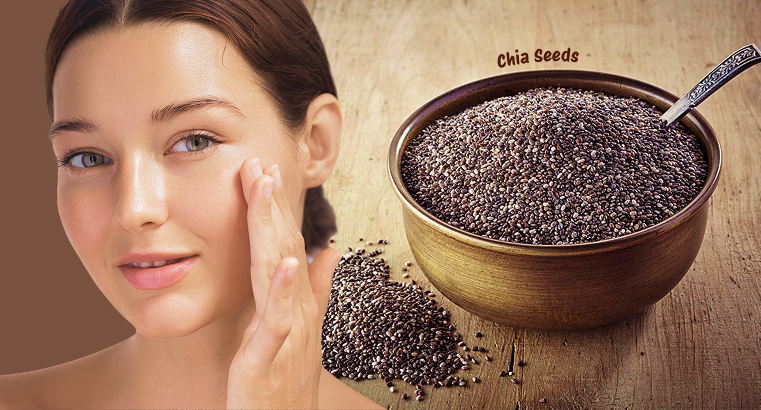
Native to Central America and now even a staple in some Indian fitness kitchens, chia seeds (or Salvia hispanica) have earned massive hype for weight loss and gut health.
However, dermatological nutritionists increasingly point out that the chia seeds benefits for skin rival many topical beauty staples. Packed with plant-based omega-3 fatty acids, zinc, and water-binding mucilage, these tiny black-and-white seeds fortify your skin barrier.
And actually, they do so much more than that! It even helps calm stubborn inflammation and lock in moisture.
Now, before you soak another spoonful in your morning smoothie or smear a DIY mask across your cheeks, let us unpack how chia seeds actually transform your complexion. Also, let us understand where the internet beauty hacks go wrong.
Health Snapshot:
• Chia seeds absorb up to 12 times their weight in water, acting as a natural moisture reservoir for dry and tight skin
• Has high plant-based omega-3 content, repairing weak spots in your skin barrier
• Stops moisture loss
• Natural zinc and linoleic acid calm angry breakouts, keeping pores from clogging
• Rich polyphenol antioxidants shield your collagen from harsh UV rays and daily city pollution
• Eating 1 to 2 tablespoons of soaked seeds daily delivers the best results
• Applying 2 drops of cold-pressed chia oil at night also helps
Inside-Out Vs. Outside-In: How Chia Seeds Interact With Your Skin Biology
Most skincare ingredients only work on the outermost layer of your epidermis, offering temporary surface relief that washes down the drain every evening.
Chia seeds operate on a dual-pathway mechanism that addresses both structural nutrition as well as topical barrier repair.
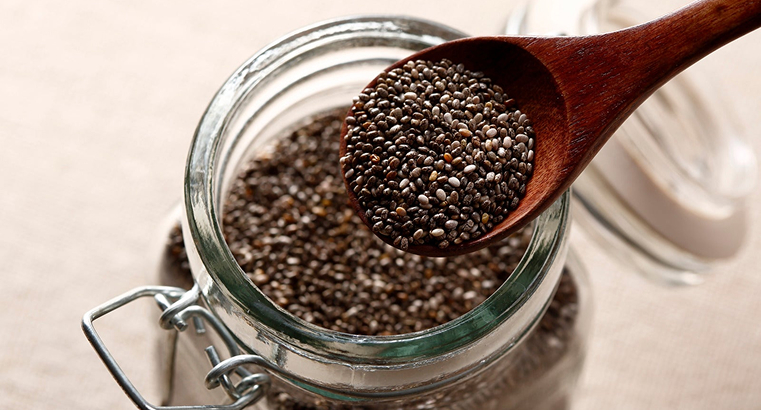
On the other hand, when you eat soaked chia seeds, your digestive tract slowly breaks down their dense concentration of alpha-linolenic acid (ALA), which is a plant-based omega-3 fatty acid.
Since human skin cells rely only on essential fatty acids to construct healthy, flexible cell membranes, consistent omega-3 intake literally patches microscopic gaps in your skin’s moisture barrier.
Try thinking of your skin as bricks, where essential fatty acids are the mortar holding them tight against pollution, harsh hard water, and dry air-conditioning.
Topically, chia seeds behave completely differently. That is all thanks to a soluble fiber coating known as mucilage. The moment these seeds touch water, they start to release a clear, slippery polysaccharide gel. This mimics the humectant properties of hyaluronic acid.
Taking that a step further with cold-pressed chia seed oil, you get concentrated linoleic acid along with vitamin E directly into parched skin without clogging pores.
Here Is A List Of Six Science-Backed Chia Seeds Benefits For Skin
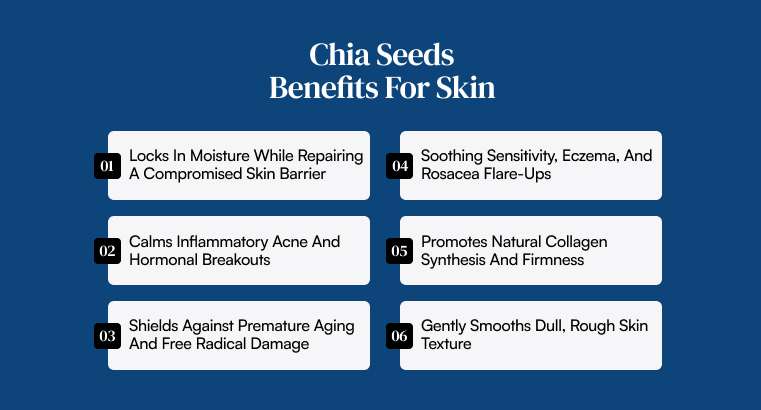
Social media beauty trends often exaggerate kitchen ingredients. However, nutritional biochemistry confirms several distinct ways chia seeds can be used for the improvement of skin health across different skin types.
Locks In Moisture While Repairing A Compromised Skin Barrier
Dehydrated skin looks papery, where it feels tight after cleansing and exaggerates fine lines around the eyes and mouth. In that case, chia seeds are hydrophilic powerhouses capable of absorbing up to twelve times their weight in liquid.
Internally, their omega-3 fatty acids reduce transepidermal water loss (TEWL). Thus, this helps your epidermis retain hydration even during dry Indian winters or peak summer heat.
On a topical level, cold-pressed chia seed oil reinforces the stratum corneum. Consequently, this soothes flaky patches caused by over-exfoliation or harsh activities like retinoids.
Calms Inflammatory Acne And Hormonal Breakouts
Not all facial oils trigger pimples. In fact, acne-prone skin is usually deficient in linoleic acid. As a result, this leads to natural sebum turning thick, sticky, and pore-clogging.
Chia seed oil is exceptionally rich in linoleic and alpha-linolenic acids, which help
Chia seed oil is exceptionally rich in linoleic and alpha-linolenic acids, which help thin out congested sebum and keep pores clear.
In addition, eating chia seeds supplies a steady dose of zinc, which is a trace mineral clinically recognized for the regulation of oil gland activity. Not only that but it also accelerates blemish healing while dampening the inflammatory cascade behind painful cystic breakouts.
Shields Against Premature Aging And Free Radical Damage
Every time you step out into harsh sunlight or sit in bumper-to-bumper city traffic, ultraviolet rays and particulate pollution generate unstable molecules called free radicals.
If you leave these unchecked, the molecules start to shred collagen as well as elastin. As a result, this leads to sagging skin as well as dark spots.
In fact, there have been certain laboratory analyses that show chia seeds contain remarkably high concentrations of polyphenolic antioxidants. This includes chlorogenic acid, caffeic acid, and quercetin, which tend to neutralize oxidative stress before it degrades your skin’s structural scaffolding.
Soothing Sensitivity, Eczema, And Rosacea Flare-Ups
In case your face turns red and stings at the slightest weather shift, chronic micro-inflammation is likely the culprit. Omega-3 fatty acids actively compete with pro-inflammatory cytokines.
In fact, both dietary chia seeds and topical chia oil have demonstrated soothing effects on pruritus, which is chronic itchiness. Not only that, but it also helps with dry, eczematous skin, making it a gentle ally for reactive complexions.
Promotes Natural Collagen Synthesis And Firmness
Expensive collagen powders dominate beauty shelves. However, your body cannot build collagen without specific amino acid building blocks and mineral cofactors.
Chia seeds provide a complete protein profile containing lysine, proline, and glycine along with copper and zinc. These are the exact micronutrients your fibroblasts require to weave fresh and resilient collagen fibers in a natural way.
Gently Smooths Dull, Rough Skin Texture
Dead skin buildup leaves your complexion looking tired and uneven, which is common in humid climates where sweat mixes with environmental grime.
When chia seeds are thoroughly soaked in water or rosewater, their outer gel cushion softens the seed hull. This allows them to act as an ultra-mild physical buffer that lifts dull surface debris without causing micro-tears.
Eating Vs. Applying: Which Method Would Work Best For Your Skin?
Trying to choose between adding chia seeds into your breakfast bowl or applying them directly onto your face depends entirely on the specific skin concern you want to solve.
| Application Method | Primary Skin Target | How to Use Safely | Frequency |
| Soaked Dietary Intake | Acne, dry barrier, aging, dullness | Soak 1–2 tbsp in water, buttermilk, or smoothies for 20+ minutes before eating | Daily |
| Cold-Pressed Chia Seed Oil | Flaky patches, compromised barrier, fine lines | Press 2–3 drops over damp skin as the final step of your night routine | Nightly |
| Hydrating Gel Face Mask | Sun-stressed, tight, or puffy skin | Mix 1 tbsp soaked chia gel with 1 tsp aloe vera; rinse off after 10 minutes | 1–2 times weekly |
How To Customize Chia Seeds For Your Specific Skin Type
Not every complexion needs the exact same ratio of essential fatty acids or surface hydration. Adjusting how you prepare chia seeds ensures you get targeted results without overwhelming your pores.
| Skin Type | Primary Strategy | How to Prepare & Apply | Key Skin Benefit |
| Oily & Acne-Prone Skin | Focus on internal intake + lightweight gel | • Stir soaked seeds into lemon water or unsweetened chaas • Apply strained clear gel with a drop of green tea for 10 minutes | • Supplies zinc and fiber to stabilize insulin spikes • Cools inflammation without adding heavy oil |
| Dry, Dehydrated, or Mature Skin | Pair internal omega-3s with topical chia oil | • Eat soaked seeds daily • Press 2–3 drops of cold-pressed chia oil over damp skin after serum at night | • Replenishes missing lipids • Seals moisture inside the epidermis without heavy pore-clogging balms |
| Combination & Sensitive Skin | Use a soothing, fragrance-free recovery mask | • Mix soaked chia seed gel with pure aloe vera • Apply as a 10-minute calming compress | Restores barrier comfort after sun exposure or harsh actives without synthetic preservatives |
Chia Seeds Vs. Flaxseeds Vs. Hemp Seeds For Skin Health
Indian kitchens are packed with nutrient-dense seeds, which frequently leaves people wondering whether chia seeds truly outperform flaxseeds or hemp seeds when it comes to complexion benefits.
| Seed Type | Standout Skin Nutrient | Primary Skin Benefit | Practical Limitation |
| Chia Seeds | Alpha-linolenic acid (ALA) + mucilage gel + polyphenols | Superior water retention, barrier repair, and antioxidant defense | Must be fully soaked before eating or applying topically |
| Flaxseeds | Lignans + omega-3 fatty acids | Balances hormone-driven breakouts and improves skin smoothness | Whole seeds pass through undigested; must be freshly ground |
| Hemp Seeds | Gamma-linolenic acid (GLA) + balanced omega-6:omega-3 ratio | Deeply calms chronic dryness, flaking, and inflammatory redness | Higher calorie density and lacks hydrating mucilage gel |
Flaxseeds excel at hormone-related skin support, whereas hemp seeds shine for severe lipid dryness.
On the other hand, chia seeds offer the best all-around versatility. This is because they deliver both internal fatty acids and a ready-to-use topical humectant gel.
Realistic Timeline: How Long Until You See Results?
When your skincare is powered by nutrition, it works at the pace of human cell turnover rather than overnight chemical exfoliation.
Because the epidermis takes roughly twenty-eight to forty days to shed old cells and push fresh, lipid-rich keratinocytes to the surface, patience is essential.
The timeline sort of goes like this.
| Timeline | Internal Support | Visible Skin Results |
| Days 7-10 | Improved digestion and hydration | Less morning puffiness and dullness |
| Weeks 3-4 | Strengthened cell membranes hold moisture | Softer dry patches; less sensitivity to hard water or AC |
| Weeks 6-8 | Consistent zinc, amino acids, and antioxidants | Calmer breakouts, smoother texture, and a natural glow |
Three DIY Chia Seed Skincare Mistakes To Avoid
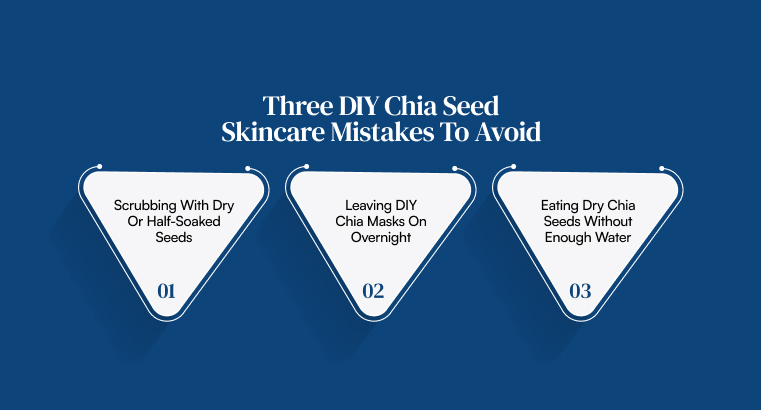
Now that we know the benefits and timeline for results on using these seeds, you definitely have to keep one thing in your mind.
Kitchen skincare can easily backfire if you ignore basic dermatological hygiene. Before experimenting with homemade remedies, steer clear of these common blunders that irritate more than they actually heal.
Mistake 1: Scrubbing With Dry Or Half-Soaked Seeds
A common mistake people tend to make is to scrub with dry chia seeds or ones that are not properly soaked. Never do that!
Unsoaked seed shells have sharp edges that can create microscopic tears in your skin barrier. This can invite bacterial infection and post-inflammatory hyperpigmentation.
In addition, soak seeds for at least thirty minutes until a thick, uniform jelly surrounds every single grain.
Mistake 2: Leaving DIY Chia Masks On Overnight
When you leave a damp, sticky seed paste on your face for hours, it can suffocate pores and trigger fungal acne. Actually, homemade chia masks contain zero preservatives, which can attract airborne bacteria quickly in warm, humid bathrooms.
So, stick strictly to a ten-minute rinse-off window and never store leftover kitchen mixes for more than twenty-four hours in the fridge.
Mistake 3: Eating Dry Chia Seeds Without Enough Water
Internally, dry chia seeds expand rapidly upon hitting stomach fluids, which can cause uncomfortable bloating and even digestive sluggishness. It even leads to stress that swiftly shows up on your face as dullness or breakouts.
So, always pre-soak your seeds and drink plenty of water throughout the day.
Read Also: Benefits Of Turmeric In Skin: 6 Ways To Elevate Your Skincare Routine
Are Chia Seeds Worth Adding To Your Routine?
Now, look. Chia seeds will never replace your daily broad-spectrum sunscreen or prescription acne treatments. They also do not deliver overnight glass-skin miracles.
However, as an affordable, evidence-backed nutritional booster and barrier-friendly topical oil, few natural ingredients offer this much versatility.
So, try to stay consistent with one to two tablespoons of soaked seeds in your daily diet for six to eight weeks and keep your topical applications simple and hygienic.
Ultimately, let steady cellular nutrition give your skin a healthier and calmer glow.
Disclaimer:
The information provided in this article is for general informational purposes only. It does not, and is not intended to, constitute medical or health advice. Please consult a qualified healthcare professional for medical guidance or expert health assistance.
References
- Mohsen, A., Parvin, M. S., Jahani, Y., & Mehdipour-Rabori, R. (2022). The Effect of Topical Chia Oil and Coconut Oil on Pruritus and Laboratory Parameters in Hemodialysis Patients. Evidence Based Care, 12(3), 56–63. Evidence Based Care Journal.
- The Times of India. (2025, October 25). 5 things that happen to your skin when you consume Chia Seeds regularly. The Times of India.
- Knutsen, H. K. (2019). Safety of chia seeds (Salvia hispanica L.) as a novel food for extended uses pursuant to Regulation (EU) 2015/2283. EFSA Journal, 17(4). Verywell Health.
- Hickman, H. (2026, July 21). Salvia hispanica (chia seed) oil: an omega-3-rich antioxidant for nourished, calmer-looking skin. Dermalogica.
- TOI Lifestyle Desk. (2024, September 22). Chia Seed vs Flax Seed: Which one is healthier for skin. The Times of India.
What is your reaction?