By
Sometimes we take our vocal cords for granted.
It is a common fact that it is important for communication and whatnot. At the end of the day, it starts with our voice.
So, imagine losing your voice. You may have an important presentation, a client meeting, a singing competition, or anything where your voice is genuinely the primary aspect.
This just causes panic, and you end up frantically searching for how to cure lost voice overnight.
Unfortunately, here is the thing. You cannot fully cure a lost voice overnight. That is because lost voice, caused by a multitude of reasons, usually takes days to weeks to heal.
However, you can speed up recovery and reduce discomfort with proper care.
Thus, in this guide, you will understand why it happens in the first place, what steps you can follow at home for a faster recovery, what to avoid, and when to seek help.
Why Do We Lose Our Voice?

First, let us understand why we lose our voice. Medically, this phenomenon is termed aphonia.
Aphonia, or having a raspy, hoarse voice, happens when your vocal cords become swollen, irritated, or stiff and cannot vibrate vibrate normally.
In aphonia, you generally have a total loss of voice, leaving you with limited speech, whispers, or silent movement.
Additionally, it stems from physical, neurological, or psychological issues that prevent the vocal cords from vibrating properly.
| Category | Specific Cause | How It Impacts Your Voice |
| Physical & Structural | Laryngitis & Infections(Colds, flu, COVID-19) | Causes swelling and inflammation of the larynx or vocal cords |
| Voice Overuse (Phonotrauma)(Yelling, screaming, prolonged talking) | Strains the voice and irritates the vocal apparatus | |
| Benign Growths (Nodules, polyps, cysts) | Forms non-cancerous lumps from chronic irritation or smoking, disrupting vibration | |
| Environmental Irritants (Smoke, dry air, chemical fumes) | Direct exposure causes tissue irritation and inflammation | |
| Acid Reflux (GERD) | Stomach acid rises into the throat and directly irritates laryngeal tissues | |
| Malignancy (Tumors) | Blocks vocal cord vibration or permanently damages surrounding tissue | |
| Neurological | Vocal Cord Paralysis | Nerve damage (from surgery or trauma) stops movement in one or both vocal cords |
| CNS Disorders (Stroke, Parkinson’s, MS) | Disrupts the central nervous system’s motor control over the vocal apparatus | |
| Movement Disorders (Muscle tension dysphonia) | Causes abnormal or paradoxical muscle tightening in the vocal folds | |
| Psychological & Functional | Psychogenic Aphonia (Severe stress or anxiety) | Triggers sudden voice loss where cords fail to close during speech but function normally during coughing or laughing |
Let’s Cut To The Chase: Can You Actually Cure Lost Voice Overnight?

Let us get straight to the point. You cannot completely cure a lost voice overnight.
When you “lose” your voice, your vocal cords are swollen, inflamed, and irritated, which happens due to a condition known as laryngitis.
Similar to a sprained ankle, inflamed tissue requires physical time to heal, with no magic remedy that can force that biological process to happen in a few hours.
However, you can significantly fast-track your recovery and regain partial function by morning if you aggressively protect your throat.
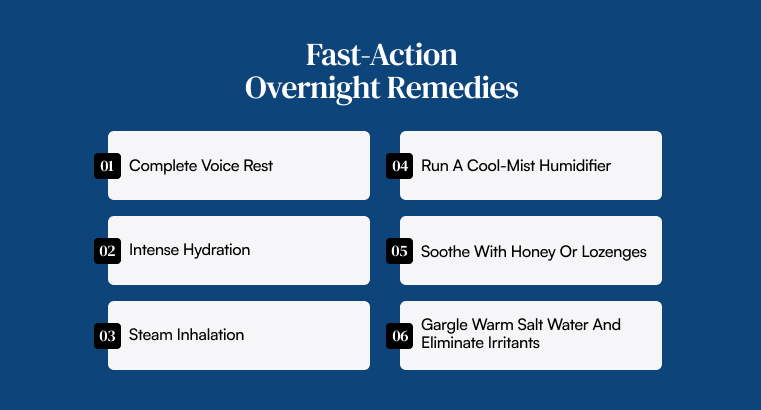
Fast-Action Overnight Remedies
Before we proceed, remember one thing.
There is no medical guarantee to completely cure a lost voice or acute laryngitis in a single night. The inflamed or strained vocal cords need time to heal.
Nonetheless, immediate, aggressive self-care overnight can significantly reduce swelling, lubricate the vocal folds, and speed up recovery.
Complete Voice Rest
One of the most important things to do during aphonia is to ensure complete voice rest.
This means no:
- Singing
- Talking
- Shouting
You may have searched for how to cure lost voice overnight, expecting an immediate answer. In addition, there may be some important event or activity that you need to participate in, and your voice plays a key role.
However, at this point, your vocal cords need complete rest.
Also, remember to avoid whispering. Actually, this only forces the vocal cords to rub together unnaturally, causing more strain than a quiet normal voice.
Alternatively, try to use writing or text messages for communication.
Intense Hydration
The key to curing your lost voice is proper hydration. So, drink plenty of warm water, caffeine-free herbal teas (chamomile or ginger), or clear broth throughout the evening.
With the help of proper systemic hydration, you can keep your mucosal layer of the vocal folds thin and healthy.
Finally, try avoiding alcohol, caffeine, and very hot or spicy drinks.
Steam Inhalation
Inhalation is a savior when it comes to a cold. Try inhaling steam right before bed for at least 10 to 15 minutes.
Sit in a steamy bathroom or lean over a bowl of hot water with a towel draped over your head.
With the help of direct moisture, you can soothe surface irritation.
Run A Cool-Mist Humidifier
Running a cool-mist humidifier is an effective home care method to help soothe irritated vocal cords while easing aphonia.
Dry air only tends to irritate and stiffen your vocal folds, making it harder for them to vibrate properly.
The addition of moisture to the air helps in keeping the throat and vocal tract lubricated.
Additionally, moist air helps loosen mucus or secretions around the vocal cords caused by viruses, colds, or overuse.
Finally, cool-mist units are safe for bedrooms, nurseries, and general living spaces.
Consequently, they help in the reduction of the risk of accidental burns compared to warm-mist options.
Soothe With Honey Or Lozenges
Swallow a teaspoon of raw honey. One of the primary benefits of consuming honey now is soothing a scratchy throat while easing irritation.
Honey acts like a natural lubricant or cough drop for the reduction of dryness and discomfort.
Not only that, but it helps calm coughing fits that can further strain an already damaged voice box.
On the other hand, sugar-free or non-menthol throat lozenges may also help stimulate saliva production and coat the throat.
Try avoiding strong menthol drops if they tend to dry out your tissues.
Gargle Warm Salt Water And Eliminate Irritants
Dissolve half a teaspoon of salt in a glass of warm water and gargle gently before bed.
This will help you to draw out excess fluid from swollen throat tissues.
Moreover, try to stay away from general irritants at this time, such as:
- Cigarette smoke
- Secondhand smoke
- Vaping chemical fumes
- Dusty environments
Also, do not forcefully clear your throat. The harsh snap will only result in further damage to the vocal cords.
What To Absolutely Avoid

In order to allow your vocal cords to heal and prevent permanent damage, you should strictly avoid anything that leads to mechanical strain, drying, or chemical irritation.
A Checklist At A Glance
| Category | What to Avoid | Healthy Alternative |
| Communication | Whispering, forcing speech | Complete vocal rest, writing notes, using text-to-speech apps |
| Hydration & Meds | Decongestants, caffeine, alcohol | Lukewarm water, herbal teas (decaf), steamy showers |
| Environment | Smoke, dry air, chemical fumes | Cool-mist humidifiers, clean air spaces |
| Diet | Late-night meals, spicy/acidic foods | Bland foods, staying upright for 3 hours after eating |
Mechanical Strain: Vocal Habits
As mentioned before, the one thing you need to avoid at all costs during this time is whispering. This only leads to squeezing the vocal cords together more tightly than normal speech.
As a result, this causes severe strain and a delay in your recovery.
Drying Elements: Diet And Environment
To protect your voice from further strain and damage, try to avoid several common irritants that can dry out and agitate your throat.
Over-the-counter decongestants meant for colds and allergies can severely dry out the delicate mucous membranes lining your vocal cords.
In a similar manner, caffeine and alcohol act as diuretics. This only leads to the acceleration of overall dehydration and stripping away necessary moisture.
Moreover, you should also skip very cold or piping hot liquids. The extreme temperatures only lead to shock that can further irritate an already inflamed throat.
Thus, lukewarm options are a safer choice.
Finally, stay away from dry air found in heavily air-conditioned or artificially heated rooms. Instead, use a cool-mist humidifier to keep your throat properly lubricated.
Chemical Irritants
In addition to environmental and chemical triggers, basic lifestyle habits play a massive role in vocal strain.
Smoking and vaping directly threaten your voice, as inhaling smoke or vapor only leads to severe irritation and inflammation of the delicate vocal tissues.
So, to protect your throat, you must also avoid secondhand smoke entirely.
Furthermore, you need to minimize acid reflux triggers to prevent stomach acid from splashing up into the throat.
Drop The DIY: When To Seek Professional Help
Here is the thing.
The internet is flooded with tips on how to cure lost voice overnight. However, the reality is that true healing takes time.
Implementing fast recovery and strictly avoiding vocal irritants will significantly speed up your healing, but there is no instant, magical cure.
But while most cases of aphonia resolve on their own, you must know when to stop relying on home remedies.
Schedule an appointment with an ear, nose, and throat (ENT) specialist or a doctor if your voice does not return after two weeks.
If your aphonia is accompanied by severe pain, difficulty swallowing, coughing up blood, or a visible lump in your neck, then consult a doctor immediately.
When DIY treatments fail, professional medical guidance is the safest and most effective way to ensure your long-term vocal health.
Disclaimer: The information provided in this article is for general informational purposes only. It does not, and is not intended to, constitute medical or health advice. Please consult a qualified healthcare professional for medical guidance or expert health assistance.
References
- Cleveland Clinic. (2026). Aphonia (Loss of voice). Cleveland Clinic.
- Childs, L. (2021). What to include in your ‘voice care lunchbox’ – and what to leave out | ENT | Prevention | UT Southwestern Medical Center.
- ENT Community Group. (2026). Your voice and how to look after it. ENT UK.
What is your reaction?