By
There is nothing quite like the sudden, anchoring dread of a stomach bug hitting your system.
Within hours, your body is completely cleared out, leaving you fully exhausted.
Not just that, but you end up shivering under a blanket and staring at the ceiling in complete survival mode.
The mere sight or smell of food may make you instantly nauseous right now.
However, your body is running on empty and desperately needs fuel and fluids to repair your battered intestinal lining and fight off the virus.
Now, you may ask yourself one question in a desperate manner. What to eat when you have a stomach bug, then?
Well, here is the trap most people fall into. They try to rush recovery. One way, they drink too much water too fast and end up triggering another wave of vomiting.
On the other hand, they eat heavy or greasy foods the moment they feel a tiny spark of appetite, which immediately backfires.
Bouncing back quickly requires a strategic, step-by-step roadmap.
Try understanding how to carefully phase in highly specific, easy-to-absorb liquids and bland, non-irritating foods. In this way, you can do all of the following without sending your digestive tract back into overdrive:
- calming the biological storm in your gut
- replenishing your depleted electrolytes
- rebuilding your strength
So, the following guide will help you understand which diet you can follow while having a stomach bug and when to seek prompt medical attention.
What Exactly Is A Stomach Bug?
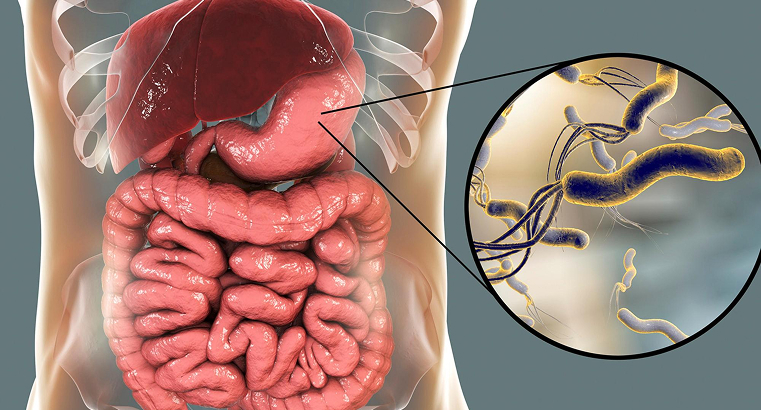
Actually, a stomach bug is the common name for viral gastroenteritis. This is an inflammation of the lining of the stomach and small intestine.
In medical terms, viral gastroenteritis is a contagious illness that is caused by a virus. This is either the norovirus or the rotavirus. However, bacteria or parasites can also trigger it.
Despite being widely termed the “stomach flu,” it actually has nothing to do with influenza (flu).
If you do not know what influenza is, then it is a respiratory virus that affects your nose, lungs, and throat.
Given its contagious nature, a stomach bug passes easily from person to person or through contaminated food, water, and surfaces.
Causes Of A Stomach Bug
| Virus Name | Primary Targets & Impact | Key Characteristics & Duration |
| Norovirus | Primarily affects adults, accounting for over half of all documented cases. | Characterized by being extremely contagious. |
| Rotavirus | Serves as the leading cause of severe, watery diarrhea in infants and young children. | This viral infection is preventable via targeted rotavirus vaccines. |
| Adenovirus (Enteric Adenovirus) | Impacts individuals across all age groups. | Triggers symptoms that typically persist longer than other bugs, lasting between 1 to 2 weeks. |
| Astrovirus | Principally impacts infants and young children. | Typically causes mild to moderate gastroenteritis symptoms. |
The primary cause of a stomach bug in adults is the norovirus, which is responsible for over half of all cases. This gives the disease its extremely contagious nature.
Another virus that causes this is the rotavirus, which is the leading cause of severe watery diarrhea in infants and young children.
However, it can be prevented with the help of a rotavirus vaccine.
Common Symptoms
A stomach bug will never give you a subtle warning of its arrival. Instead, it will usually hijack your system with a sudden and overwhelming cluster of symptoms.
These force you to stop everything that you are doing.
The severity of the condition you face is totally dependent on the specific virus that you have contracted.
However, the classic indicators will always include the following:
- Watery and non-bloody diarrhea
- Nausea and forceful vomiting spells
- Abdominal cramps and painful bloating
- Low-grade fever and periodic chills
- Muscle aches
- Deep physical exhaustion
Stomach Bug Vs. Food Poisoning Vs. Diarrhea: How To Tell Apart
Generally, a stomach bug and food poisoning are distinct conditions that share overlapping symptoms, such as nausea, vomiting, stomach cramps, and diarrhea.
However, they differ primarily in their cause, speed of onset, and how they spread.
Diarrhea is a common symptom of both conditions rather than a separate illness.
| Feature | Stomach Bug (Viral Gastroenteritis) | Food Poisoning | Diarrhea (Symptom) |
| Primary Cause | Viruses like Norovirus or Rotavirus | Bacteria, viruses, parasites, or toxins in food/water | Can be caused by infections, food, meds, or chronic conditions |
| Onset / Timing | 12 to 48 hours after exposure | 30 minutes to several hours (or days) after eating | Varies depending on the underlying trigger |
| How It Spreads | Person-to-person contact or contaminated surfaces | Eating or drinking contaminated items | N/A (it is an output/symptom, not a transmissible disease) |
| Typical Duration | 1 to 3 days (up to a week) | A few hours to a few days | Varies; lasts until the root cause clears |
| Key Clue | Other people in your household or group get sick later via contact | Multiple people who shared the exact same meal get sick together quickly | Frequent loose, watery, or sometimes bloody stools |
What To Eat When You Have A Stomach Bug: A Comprehensive List
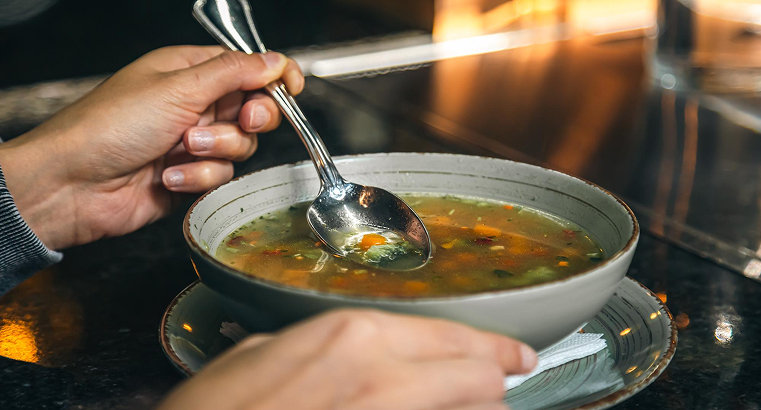
The roadmap to recovery from a stomach bug requires you to follow a careful and phased approach.
Try not to force solid foods if you are actively vomiting. Instead, let your stomach settle down first.
What To Eat: At A Glance
| Recovery Phase | Time Period | Food & Drink Options | Main Goal |
| Phase 1: Hydration | 0-6 Hours | ORS, clear broths, diluted sports drinks, diluted apple juice | Replace lost fluids and minerals without vomiting |
| Phase 2: Bland Foods | 6-24 Hours | Bananas, white rice, applesauce, toast, plain oatmeal, boiled potatoes | Provide gentle energy and firm up loose stools |
| Phase 3: Light Proteins | After 24 Hours | Baked chicken breast, plain scrambled eggs, plain tofu | Rebuild body strength as nausea fades |
Phase 1: Pure Hydration In 0-6 Hours
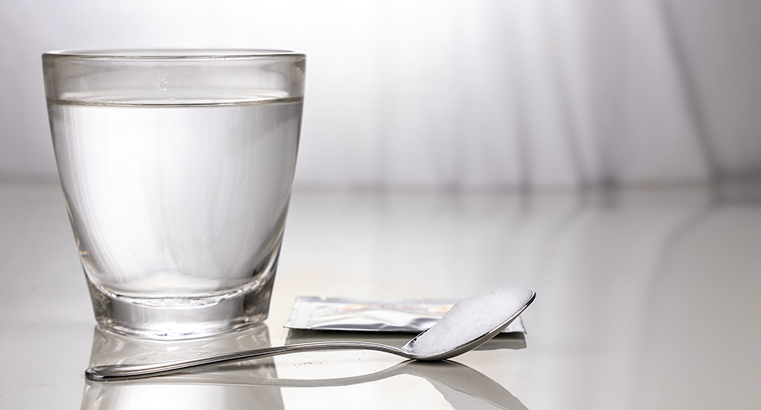
During this phase, your primary focus should be entirely on the replacement of fluids and vital minerals that are lost due to diarrhea and vomiting.
So, try to take small and frequent sips instead of drinking large quantities at once.
In short, the following should help you:
- Oral Rehydration Salts (ORS) such as Pedialyte for the ideal balance of salts and sugars for optimal gut absorption
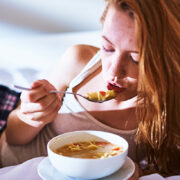
- Clear broths of chicken, beef, or vegetables for essential sodium and warmth to calm the GI tract
- Diluted sports drink and fruit juices to lower sugar load
Phase 2: Gentle Bland Foods In 6-24 Hours
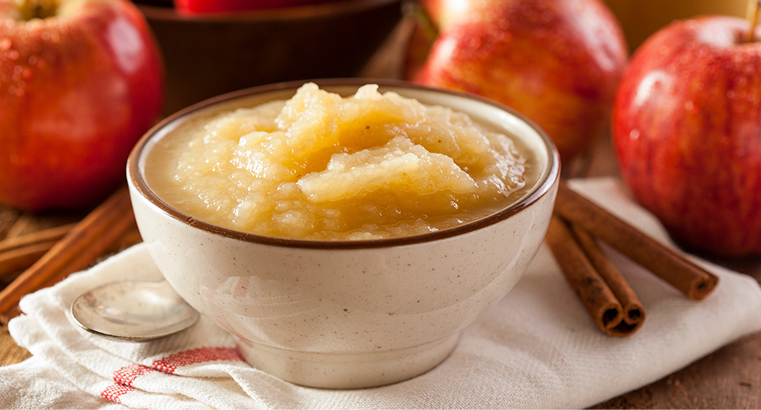
Once you can successfully keep clear fluids down for several consecutive hours, you can now introduce low-residue, binding foods.
Follow The BRAT Diet
In the BRAT diet, you eat bananas, white rice, applesauce, and toast. Basically, BRAT literally stands for what you need to consume.
Being the most popular option for an upset stomach, it can fill your stomach and retain the main nutrients while preventing any further triggers.
Bananas are soft and exceptionally easy to digest, while being packed with potassium to replenish lost electrolytes.
On the other hand, plain and well-cooked white rice offers you pure carbohydrates for energy without placing any sort of stress on your bowels.
With the help of applesauce, you can offer yourself a gentle and non-irritating source of energy.
This contains pectin, a soluble fiber that naturally firms up loose stools.
Finally, in BRAT, having white toast or crackers can offer you accessible carbs that absorb stomach acids without the introduction of heavy dietary fats.
Other Bland Foods
Apart from the BRAT diet, there are other bland foods that you can incorporate into your diet.
For instance, try having oatmeal or farina
Phase 3: Light Protein After 24 Hours
During this phase, you are recovering from a stomach bug, which is usually 24 to 48 hours after symptoms such as vomiting have stopped.
Moreover, your gut is ready for light, lean proteins to help rebuild strength without triggering a relapse.
At this stage, you want to avoid high-fat, heavily seasoned or fried options.
Best Light Proteins To Consume
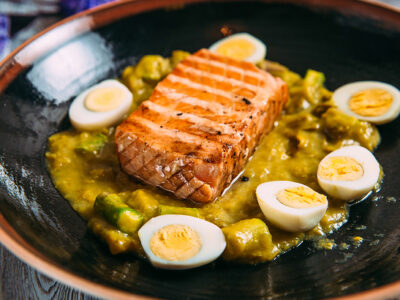
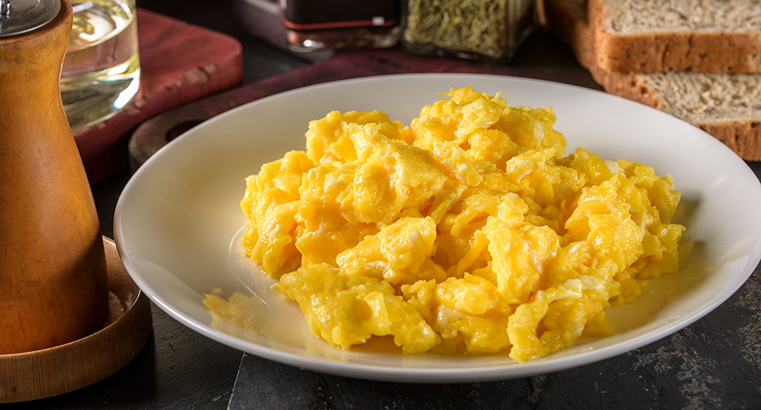
One of the best options during this phase is eggs, which you can either scramble them or have them as soft-boiled.
However, try to avoid using butter or heavy oils. Instead, you can use a non-stick pan or a tiny amount of cooking spray.
Poultry breast, such as chicken or turkey breast, is a great choice. Do try to add very little seasoning and salt.
Other options such as tofu (silken or firm) and white fish are great as well, where light baking is the most recommended cooking method.
Finally, try avoiding oil during this time.
How To Combine Them Effectively
When it comes to pairing these light proteins, you can do so with your Phase 2 starches.
As a result, this will let you create a well-rounded and easy-to-digest meal:
- Chicken and rice
- Egg toast
- Simple broth with chicken and tofu chunks
What To Strictly Avoid
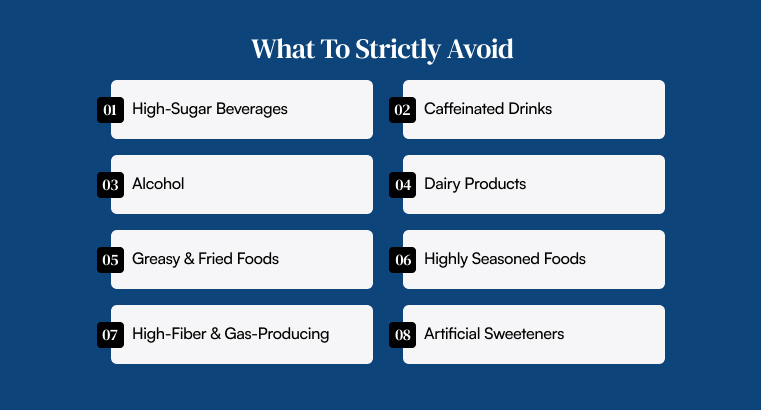
While nutrition is important even during a stomach bug, you need to avoid certain foods. During recovery, your digestive tract is highly inflamed.
So, strictly avoid foods that will irritate the stomach lining, accelerate dehydration, or trigger nausea and diarrhea.
| Food/Drink Category | Specific Items to Avoid | Why You Must Avoid It |
| High-Sugar Beverages | Soda, fruit juices, sports drinks with high sugar, energy drinks | Sugar draws water into the intestines, worsening diarrhea. |
| Caffeinated Drinks | Coffee, black tea, energy drinks | Caffeine is a diuretic that speeds up dehydration and stimulates bowel movements. |
| Alcohol | Beer, wine, liquor | Alcohol acts as a diuretic, irritates the stomach lining, and interacts poorly with medications. |
| Dairy Products | Milk, cheese, butter, ice cream, yogurt | The bug temporarily destroys lactase enzymes, causing temporary lactose intolerance and bloating. |
| Greasy & Fried Foods | Fast food, chips, pizza, heavy oils, butter | High-fat foods are incredibly difficult to digest and delay stomach emptying, increasing nausea. |
| Highly Seasoned Foods | Hot sauce, chili powder, curry, garlic, onions | Spicy foods irritate the already raw and inflamed lining of the stomach and intestines. |
| High-Fiber & Gas-Producing | Beans, broccoli, cauliflower, whole grains, raw vegetables | High fiber stimulates the digestive tract too much and causes painful gas and bloating. |
| Artificial Sweeteners | Sugar-free candy, diet sodas, items with sorbitol or xylitol | These sweeteners are poorly absorbed and have a laxative effect that worsens diarrhea. |
Seek Immediate Medical Help If You Experience This
If you notice the following, it is highly recommended that you seek immediate medical help:
- Vomiting blood or material that resembles ground coffee
- Bright green vomit
- Bloody, black or tarry bowel movements
- Inability to keep any liquids down for 24 hours
- Little to no urination or dark yellow, scant urine
- Dizziness, lightheadedness, or severe weakness
- Grey, blue, or pale and blotchy skin, lips, or tongue
- Sudden or severe worsening stomach or abdominal pain
- A high fever that exceeds 104°F (40°C)
- Symptoms that last longer than 2 to 3 days without improvement
Disclaimer: The information provided in this article is for general informational purposes only. It does not, and is not intended to, constitute medical or health advice. Please consult a qualified healthcare professional for medical guidance or expert health assistance.
References
- Pittman, S. (2025). Understanding the BRAT diet: Foods, benefits and uses. UT MD Anderson.
- National Cancer Institute. (2024). Easy-to-Digest foods. National Cancer Institute at the National Institutes of Health.
- Mayo Clinic. (2025). Viral gastroenteritis (stomach flu) – Symptoms and causes. Mayo Clinic.
- National Institute of Diabetes and Digestive and Kidney Diseases. (2026). Treatment of viral gastroenteritis (“Stomach flu”). National Institute of Diabetes and Digestive and Kidney Diseases.
- Centers for Disease Control and Prevention. (2024). About Norovirus. Centers for Disease Control and Prevention.
- GOV.UK. (2026). Stomach bugs: A brief guide to their causes and treatment. GOV.UK.
- National Institute of Diabetes and Digestive and Kidney Diseases. (2025). Symptoms & Causes of Viral Gastroenteritis (“Stomach Flu”). National Institute of Diabetes and Digestive and Kidney Diseases.
What is your reaction?