By
It’s finally night after a long and exhausting day. You get into bed, close your eyes, and expect sleep to come naturally. Instead, you find yourself tossing and turning, staring at the ceiling, and wondering why falling asleep feels impossible.
When this issue occurs once or twice, it is not that big of a deal at first. However, when sleep difficulties begin occurring regularly, they may be linked to insomnia or other underlying sleep issues.
So if you have ever wondered how to sleep better at night naturally, you are not alone. Millions of people struggle to fall asleep, stay asleep, or wake up feeling refreshed each morning.
In fact, insomnia is considered one of the most common sleep disorders.
According to Georgiev et al. (2025), chronic insomnia is the most common sleep disorder affecting up to 10% of the global population. Moreover, more than one-third of the individuals worldwide tend to report insufficient sleep as a common complaint.
However, getting a good night’s sleep is one of the most important things one can do. That is because not only would it help optimize your health, but it would also avoid facing the absolutely terrible impact poor sleep has on you.
Thus, in this guide, you’ll learn why you may be struggling to sleep, when insomnia becomes a concern, the foods and habits that affect sleep quality, and practical ways to improve your sleep naturally.
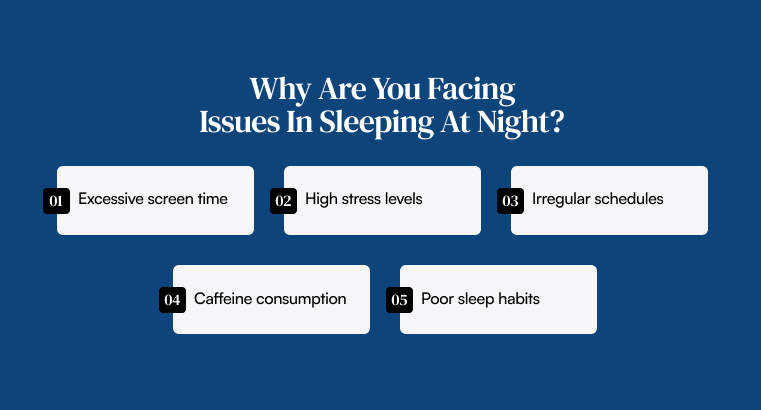
Why Are You Facing Issues In Sleeping At Night?
The thing is, modern lifestyles often work against healthy sleep.
Now, combine factors such as the following, and everything ends up making it harder to get quality rest:
- Excessive screen time
- High stress levels
- Irregular schedules
- Caffeine consumption
- Poor sleep habits
However, here is the thing. Getting quality sleep plays a critical role in physical health, mental well-being, immune function and your overall productivity. Even a few nights of poor sleep can affect concentration, mood, and energy levels.
Stress And Anxiety Keeping Your Brain Awake
One of the most common factors in having difficulties sleeping is stress and anxiety. Usually, they tend to lock your brain in a state of cognitive and physiological hyperarousal.
As a result, this triggers the release of stress hormones such as cortisol and adrenaline.
According to Maish (2026), stress and sleep negatively affect each other in a continuous loop, as high cortisol levels break up sleep and reduce deep rest. At the same time, a lack of quality sleep makes the body’s HPA stress response up to 37% stronger.
With the consistent release of these hormones, your sympathetic nervous system (or the fight-or-flight mode) tends to stay active.
So, consequently, when the lights go out, daily distractions fade away. This makes unresolved worries, task lists, and anticipatory fear of not sleeping feel louder and more urgent.
Too Much Screen Time Before Bed
When you are exposed to excessive screen time before bed, it tends to suppress melatonin, while keeping your brain too alert to sleep.
There are 3 specific reasons why you cannot sleep, and screens actively take part in ruining it for you.
- Blue Light Suppression: Phones, tablets, and TVs emit short-wavelength blue light that tricks your pineal gland into halting melatonin production.
- Mental Stimulation: Using social media and messaging apps or gaming right before bed could trigger emotional and cognitive arousal, leading to adrenaline rushes instead of calm.
- Time Displacement: Scrolling through your phone late at night ends up pushing back your total sleep duration while shifting your natural circadian clock.
An Irregular Sleep Schedule
Having an irregular sleep schedule ends up throwing off your body’s internal clock or circadian rhythm. As a result, this makes it hard to fall asleep when you want to.
Let us understand why. Your brain relies on a consistent master clock, which is controlled by the suprachiasmatic nucleus. This releases sleep hormones such as melatonin at the right time.
However, going to bed and waking up at different times each day signals mixed messages to this clock.
Another reason for this is that sleep is partly regulated by how long you have been awake. If you sleep in, take long naps, or stay up late, you ultimately build up too little “sleep pressure” by nighttime. As a result, you are left with your brain being wide awake.
Also, when your routine is broken, your body can release stress hormones such as cortisol at night. This makes your mind race or keeps your nervous system on high alert.
Caffeine And Other Stimulants
When you consume caffeine or other stimulants, it can make you stay awake. That is so by blocking sleep-promoting brain chemicals and over-activating your central nervous system.
As you stay awake, your brain builds up a natural chemical known as adenosine, which creates “sleep pressure.” Now, caffeine has a similar chemical structure, which plugs into your brain’s adenosine receptors, blocking them so you do not feel tired.
Now, caffeine has a half-life of 3 to 7 hours. This means that half of the amount you consume is still circulating in your body many hours later.
A cup of coffee in the afternoon can still leave a quarter of its active caffeine in your system by midnight. Also, even if you can manage to fall asleep, caffeine shortens your total sleep time.
Meanwhile, it cuts down on slow-wave or deep and REM sleep, leading to fragmented, unrefreshing rest.
Other Reasons:
The truth is that poor sleep is rarely caused by a single factor. In fact, in many cases, a combination of lifestyle habits, health conditions, and daily routines may be disrupting your sleep. And you may not even realize it!.
Some common examples include:
- Poor sleep habits and sleep hygiene
- Foods and drinks that negatively affect sleep
- Lack of physical activity during the day
- Underlying health conditions
- Certain medications and supplements
When Does Difficulty Sleeping Become Chronic Insomnia?
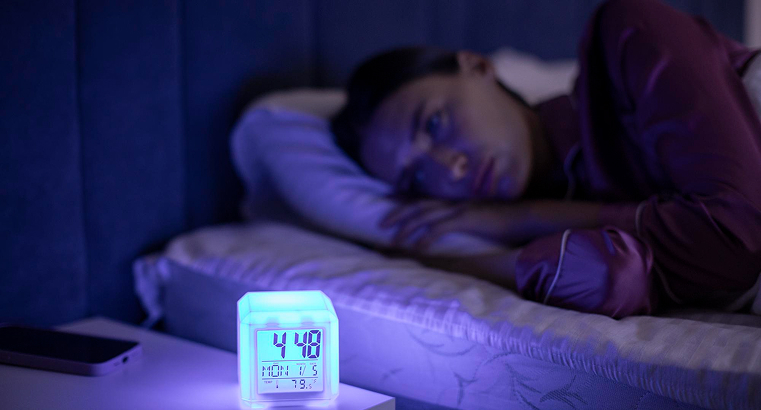
For the record, everyone has different experiences when it comes to facing occasional sleepless nights from time to time. However, facing difficulties in sleeping may be considered a deeper problem when it persists for an extended period and begins to affect daily functioning.
Then, it goes on to become chronic insomnia.
According to McNamara et al. (2025), chronic insomnia is generally diagnosed when a person has trouble falling asleep, staying asleep, or waking up too early. Moreover, this is at least three nights per week for three months or longer.
Unlike temporary sleep disturbances, chronic insomnia tends to persist even when sleep opportunities are adequate. Actually, sleep disturbances are quite common due to stress, travel, or lifestyle changes.
Over time, it can lead to symptoms such as daytime fatigue, irritability, difficulty concentrating, poor memory, reduced productivity, and mood changes.
In some cases, chronic insomnia may be linked to underlying medical conditions, mental health concerns, medications, or other sleep disorders.
Because prolonged sleep deprivation can negatively impact both physical and mental well-being, it is important not to ignore persistent sleep problems.
If your sleep difficulties continue for several weeks or months despite making healthy lifestyle changes, it may be time to seek professional medical advice.
Generic Sleep Disturbance Vs. Chronic Insomnia
| Factor | General Sleep Disturbance | Chronic Insomnia |
| Duration | Usually lasts a few days to a few weeks | Persists for at least 3 months |
| Frequency | Occurs occasionally | Occurs at least 3 nights per week |
| Common Causes | Stress, travel, illness, caffeine, temporary lifestyle changes | Long-term stress, mental health issues, chronic medical conditions, sleep disorders, certain medications |
| Difficulty Falling Asleep | Happens from time to time | Occurs regularly and persistently |
| Difficulty Staying Asleep | Usually temporary | Frequent nighttime awakenings over an extended period |
| Sleep Opportunities | Often improves once the trigger is removed | Continues despite having adequate time and opportunity to sleep |
| Daytime Impact | Mild tiredness or temporary lack of focus | Persistent fatigue, irritability, poor concentration, memory problems, and reduced productivity |
| Effect on Daily Life | Generally manageable and short-lived | Can significantly affect work performance, mood, relationships, and overall quality of life |
| Need for Medical Attention | Usually not required unless symptoms worsen | Professional evaluation is often recommended, especially if symptoms persist despite lifestyle changes |
| Typical Outcome | Often resolves on its own | Usually requires identifying and addressing underlying causes |
Follow These Mandatory Evening Rituals For Better Sleep!
Here is a list of seven evening rituals you can implement in your daily routine for a better sleep at night, naturally.
| Evening Ritual | What To Do | How It Helps You Sleep Better |
| Set a Consistent Sleep Schedule | Go to bed and wake up at the same time every day, including weekends | Strengthens your circadian rhythm and helps your body know when it’s time to sleep and wake up |
| Disconnect from Screens and Blue Light | Put away phones, tablets, laptops, and TVs 30 to 60 minutes before bedtime | Reduces blue light exposure, allowing melatonin production to increase naturally |
| Read a Physical Book | Spend 15 to 30 minutes reading a light, non-stimulating book | Helps your mind unwind while creating a positive association between bedtime and relaxation |
| Sip Caffeine-Free Herbal Tea | Choose chamomile, lavender, lemon balm, or another caffeine-free herbal tea | Promotes relaxation and helps calm the nervous system before bed |
| Take a Warm Bath or Shower | Have a warm bath or shower about 60 to 90 minutes before bedtime | The post-bath drop in body temperature signals your body that it’s time to sleep |
| Do a “Brain Dump” or Journal | Write down worries, unfinished tasks, or your plans for the next day | Reduces mental clutter and prevents late-night overthinking |
| Practice Light Stretching or Meditation | Perform gentle stretches, breathing exercises, meditation, or bedtime yoga for 5 to 10 minutes | Releases physical tension, lowers stress levels, and prepares the body for restorative sleep |
However, here’s a prototype. You don’t need to implement all seven rituals at once. Actually, try to start with two or three habits that would feel realistic for your lifestyle.
Gradually, build a consistent bedtime routine. In fact, consistency is often more important than perfection when you are trying to learn how to sleep better at night naturally.
How To Sleep Better At Night Naturally: A Few Tips To Follow Before Bed
Health coach and influencer Rujuta Diwekar advocates a natural approach to sleep that’s deeply rooted in Ayurveda and dinacharya. This is known as a structured daily routine.
In fact, her recommendations include:
- Maintaining fixed sleep timings
- Preparing a bedside sleep kit
- Taking warm baths in Neem and nutmeg
- Following calming bedtime rituals to help the body transition into rest mode
Now, these practices can be very beneficial. However, the reality is that many people are bound to juggle demanding work schedules, family responsibilities, long commutes, and other daily commitments. So, creating an extensive nighttime routine may not always be the most practical solution.
Fortunately, there is still hope. Improving your sleep does not have to be complicated.
Even a few simple science-backed habits before bed can make a noticeable difference. It will dictate how quickly you fall asleep and the quality of rest you get throughout the night.
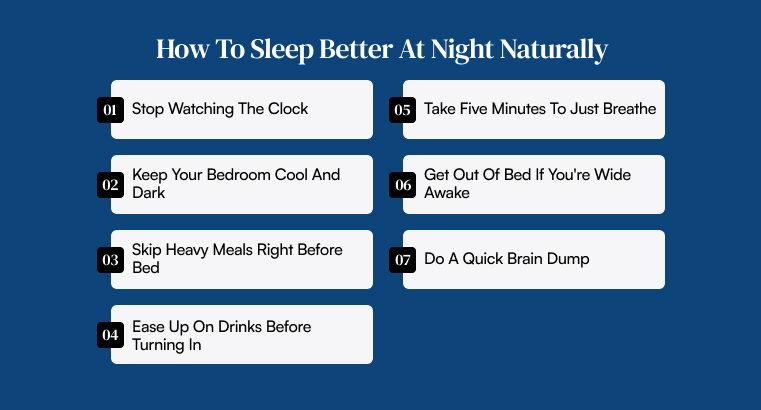
Stop Watching The Clock
When you keep checking the time every few minutes, it will only add pressure. Ultimately, this makes it harder to drift off.
So, if your sleep is not coming right away, try to first turn your clock around. On the other hand, you may put your phone out of reach. In this way, you can focus on simply resting instead of calculating just how little sleep you are about to get.
Keep Your Bedroom Cool And Dark
Next up, try to ensure this.
Your body naturally sleeps better when your room feels like a cozy cave. If outside lights or street noise are keeping you up, try hanging blackout curtains. You may also try dimming the lights early, or running a white-noise machine to block out distractions.
Skip Heavy Meals Right Before Bed
Eating a big, spicy, or rich meal right before turning in forces your stomach to work overtime.
In addition, give your body a little space to digest so discomfort or heartburn doesn’t keep you tossing and turning.
Ease Up On Drinks Before Turning In
Staying hydrated is great. But just try not to chug a huge glass of water right before bed. Cutting back on fluids during the last hour of your night saves you from annoying middle-of-the-night bathroom trips.
Take Five Minutes To Just Breathe
A few minutes of slow, intentional breathing can do wonders when your mind is racing. For example, when you find yourself feeling restless, try the like the 4-7-8 technique.
In this way, it helps slow down your heart rate, melts away the day’s tension, and lets your body know it’s safe to wind down.
Get Out Of Bed If You’re Wide Awake
If you’ve been staring at the ceiling for 20 or 30 minutes, don’t force it. Instead, step into another room and do something low-key.
Try reading a boring book in dim light until your eyelids start feeling heavy again.
That way, your brain keeps connecting your bed with actual sleep, not frustration.
Do A Quick Brain Dump
Instead of lying awake mentally rehearsing tomorrow’s to-do list, jot everything down on a piece of paper before you get under the covers.
Getting those tasks out of your head and onto a page makes it much easier to finally let go and fall asleep.
Does Food Affect Your Sleep At Night?
Are you wondering whether your diet plays any role here? Well, in fact, the answer is yes. What and when you eat has a significant effect on your overall sleep quality, how fast you fall asleep, and how well you can stay asleep through the night.
Say you eat a large and heavy meal right before bed. It would end up forcing your digestive system to work overtime while you sleep. As a result, this can lead to indigestion, bloating, and discomfort.
On the other hand, consuming sugary foods or refined carbs late in the evening can cause blood sugar levels to spike and then crash. Thus, you experience frequent nighttime awakenings.
When Should You Consult A Healthcare Professional?

While occasional sleepless nights are usually nothing to worry about, persistent sleep problems should not be ignored.
Actually, in many cases, improving your sleep hygiene, managing stress, and following a consistent bedtime routine can resolve mild sleep disturbances.
However, there are times when professional medical advice becomes necessary.
Consider speaking with a healthcare professional if your sleep difficulties persist for several weeks despite making healthy lifestyle changes. The same applies if you regularly struggle to fall asleep, wake up multiple times during the night, or wake up much earlier than intended and cannot fall back asleep.
Additionally, seek medical attention if poor sleep is beginning to affect your daily life. This may include excessive daytime fatigue, difficulty concentrating, memory problems, irritability, mood changes, or reduced performance at work or school.
In some cases, chronic sleep problems may be linked to underlying conditions such as insomnia, sleep apnea, anxiety disorders, depression, thyroid disorders, chronic pain, or medication side effects.
A healthcare professional can help identify the root cause and recommend appropriate treatment options.
Most importantly, do not wait until sleep deprivation begins affecting your physical and mental well-being.
If quality sleep continues to feel out of reach despite your best efforts, professional guidance can help you get the rest your body and mind need.
Disclaimer: The information provided in this article is for general informational purposes only. It does not, and is not intended to, constitute medical or health advice. Please consult a qualified healthcare professional for medical guidance or expert health assistance.
References
- Georgiev, T., Draganova, A., Avramov, K., & Terziyski, K. (2025). Chronic insomnia – beyond the symptom of insufficient sleep. Folia Medica, 67(3).
- Maish, W. (2026, October 15). Stress and sleep: how they disrupt each other. Superpower.
- McNamara, S., Spurling, B. C., & Bollu, P. C. (2025, March 28). Chronic insomnia. StatPearls – NCBI Bookshelf.
What is your reaction?